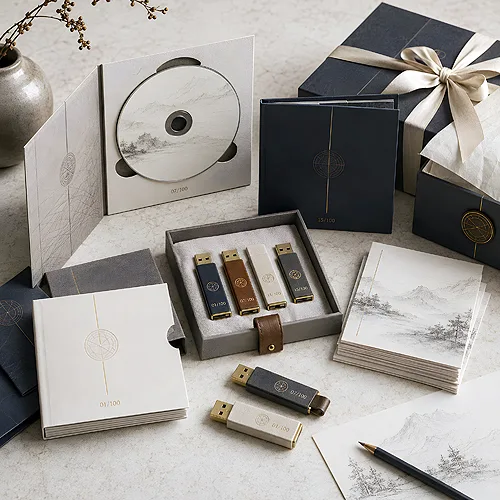
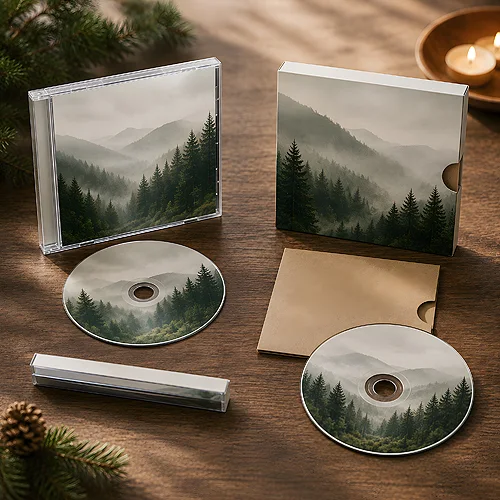
The topics here fall into two halves: what goes on the disc and how the disc is made. The first is about repertoire and the idea behind it, the second about the print, the cover and the packaging.
Printing or replication
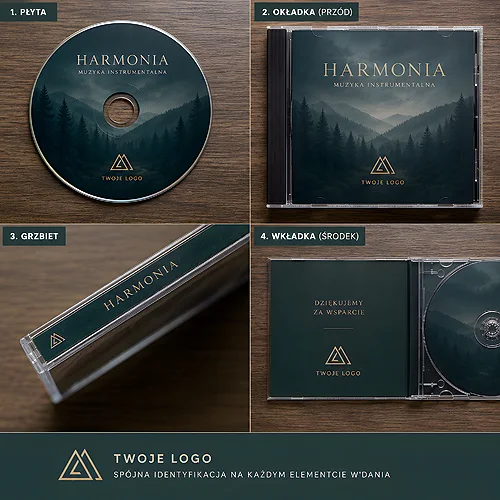
Printing is done on ready-made discs, so it suits smaller runs and keepsake projects, such as a disc of communion photographs. Replication means making the disc from scratch, the usual route for larger published runs, and only there does the choice of base colour appear, gold included. The design is prepared much the same way either way: it is a circle with a hole in the middle, so keep the key wording away from the centre and make sure everything still reads at that small size.
Packaging carries half the impression
- an envelope - the simplest option for posting or adding a disc to a set,
- a sleeve, when the disc has to slip into a folder or a bag pocket,
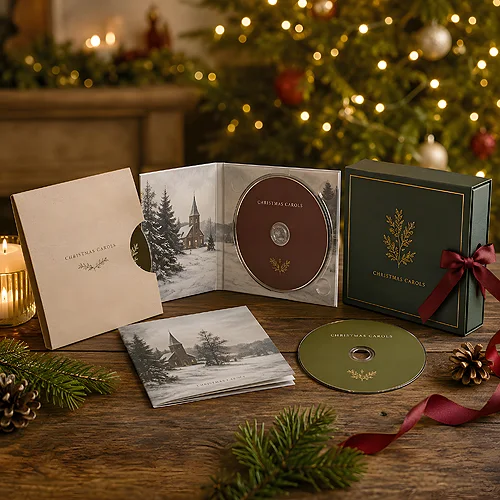
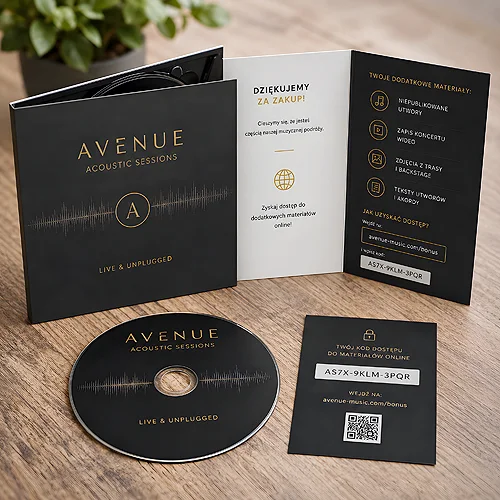
- a digipack or ecopack, when the cover should look like a proper release,
- a booklet added to the set, when there is something worth writing down,
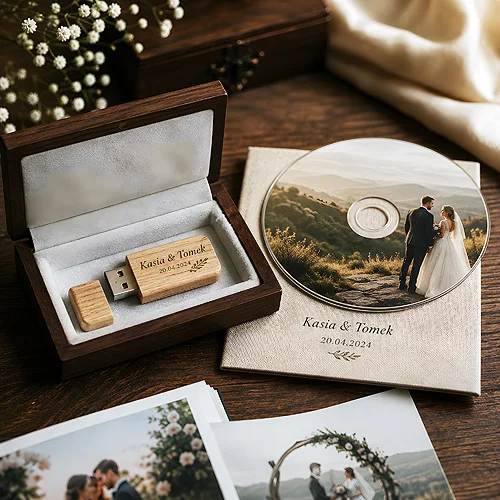
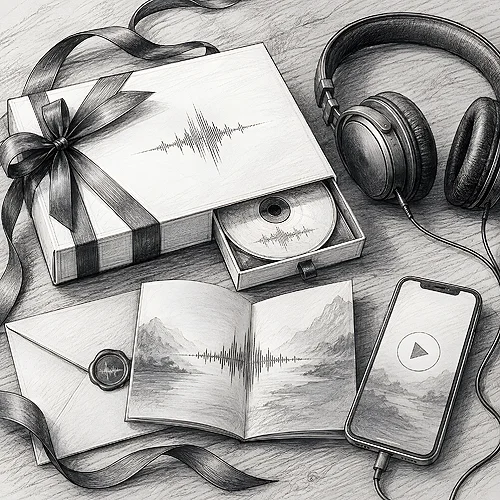
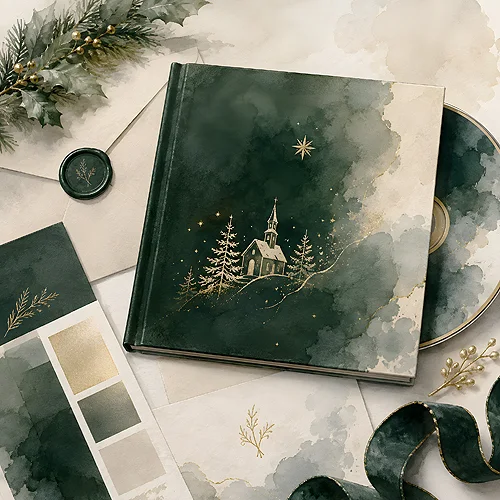
- a box, when the disc is a gift or a family keepsake.
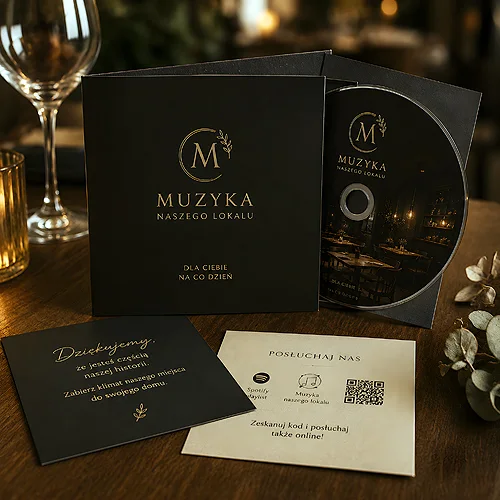
The cover doubles as advertising space - it holds a logo, a web address and a short note about the company, without turning a keepsake into a leaflet.
When a disc makes sense
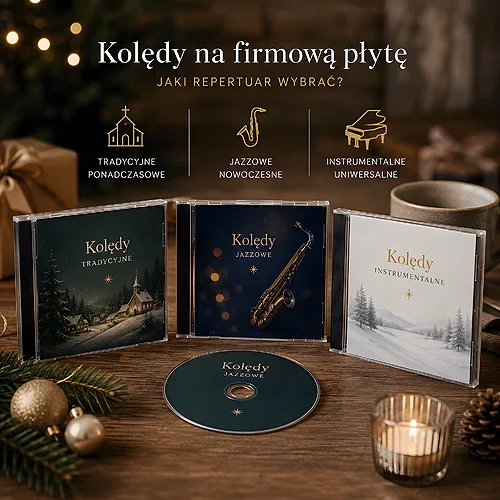
The articles describe concrete situations: music chosen to match a hotel, a clinic or a restaurant, a seasonal gift for business partners, a disc of carols, a portfolio handed to a client, a folder with room for a disc and paperwork. If you are torn between formats, read these alongside the flash drive texts - for the same occasion one or the other tends to win.