34 articles about promotional and keepsake USB drives. Three questions keep coming back: which drive to choose, what to put on it and how to pack it. The answer usually depends on who receives it and on what occasion.
Casing and marking
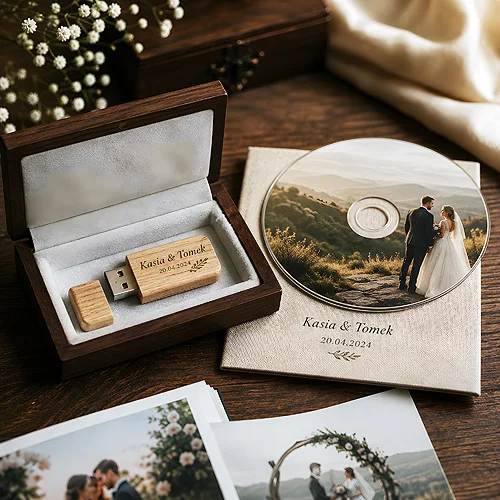
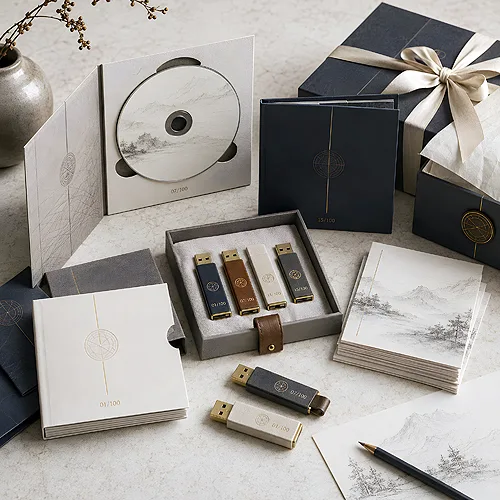
The casing sets the tone. Plastic allows the widest range of shapes and colours. Metal reads as formal and survives life on a keyring. Wood suits natural brands and family celebrations. The marking method follows the material. Laser engraving leaves a plain, single-colour mark, so it is worth checking that the logo stays readable when simplified. Printing lets you show colour. Drives also differ in the connector: you will meet USB 2.0 and USB 3.2 gen.1, which handles larger files such as video more comfortably.
Content people actually open
- A catalogue or portfolio in PDF, ready to browse without a connection.
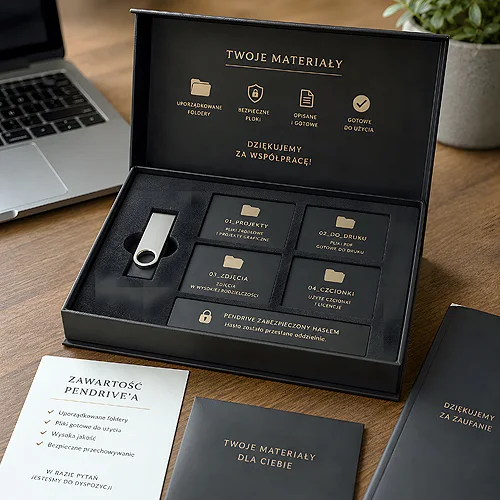
- An investor presentation: figures, film and clearly named folders.
- A welcome pack for a new colleague or client, with the materials they need on day one.
- Photos and film from a celebration, a wedding or a christening, labelled so they can still be found years later.
- A short start file describing the contents instead of dozens of loose folders.
Packaging carries half the impression
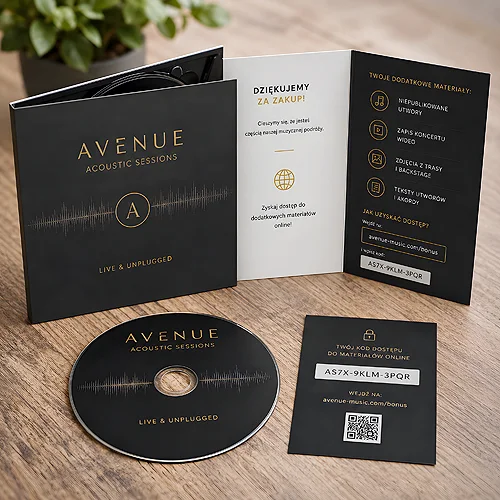
A card box, a wooden case, a metal tin or a printed card with a cut-out slot. Each option sets a different mood and handles posting differently. Family keepsakes usually call for a printed box. At trade shows and conferences a light card or sleeve that is easy to hand out tends to work better.
If you are planning a promotional set, it helps to think about a matching leaflet and business card from the start. Available models, capacities and marking methods are listed on the product page.