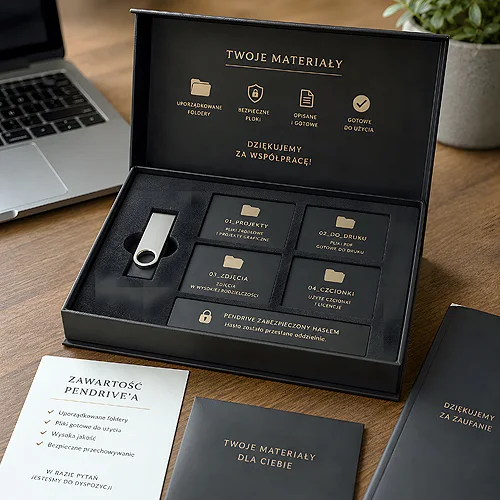
A link to a presentation disappears into an inbox. An object on a desk finds its way back into someone's hands many times over. Hence the idea that keeps returning here: hand over a memory stick with a ready set of materials, labelled clearly enough that a month later it is still obvious who sent it.
What belongs inside
The contents decide whether anyone opens the files at all. Arrange them like a table of contents, not like a copy of your hard drive. Folders named in plain language get opened; a pile of cryptic abbreviations does not.
- A short presentation - the key facts on a few slides, placed first.
- Photographs of past work - in folders with plain names, no stray files.
- A film - a short clip from production or an installation says more than a description.
- A product catalogue - in a form that opens on any computer.
- References - a few lines from clients, with the company and the person named.
- Contact details - one page naming the person handling the account.
Packaging and labelling
The second matter is how it looks. An unlabelled stick is anonymous within a week, so put your logo and a short line or a project name on it. A printed box or sleeve makes the whole thing feel prepared rather than pulled out of a drawer. With an investor or a large client that counts: a first impression happens once, and the item outlasts the meeting by a long way.
If you are wondering whether this suits your company, begin with the piece on the trades where a portfolio on a stick works best. Then match the contents and the packaging to the person you are meeting. A set prepared once will also serve you at trade fairs and when sending out quotes.