Most contact with clients now happens through a screen, so anything that arrives in an envelope stands out on its own. The articles here return to that observation on different occasions - Christmas, Easter, the new year and the closing of a project.
Why paper stays in mind longer
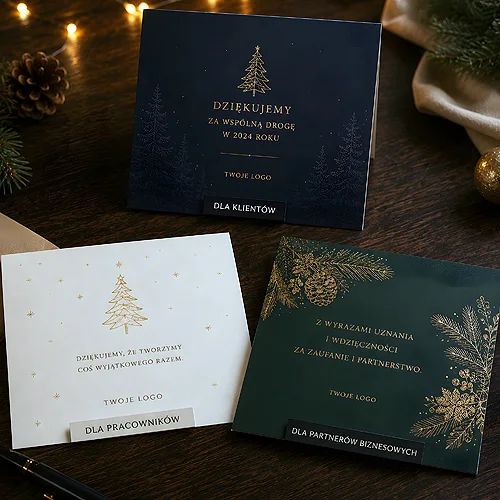
An email disappears among dozens of others that arrived alongside it. A card sits on a desk for a week or two and reminds the recipient of the sender every time they glance at it. There is also visible effort behind it: somebody prepared the list, signed it and posted it. That small cost of attention reads as respect, and it carries more weight than the wording itself.
Planning it without going overboard
The point is not to send something every month. A few well chosen moments in the year work better.
- The end of the year - a thank you and a short note on how the work went.
- Easter or early spring - a quiet moment when few companies get in touch, so it is easier to stand out.
- The anniversary of working together - a date only one side remembers, which is exactly why it lands well.
- A parcel with an order - a few lines on an insert cost the least effort and get noticed most often.
- A small gift for the team - the people inside the company are recipients too, which is easy to forget.
If you are starting out, choose one moment in the year and do it properly. The texts on greetings and company gifts will suggest what to write and what to add, so the parcel does not turn into an advert.