The best advertising is the kind nobody reads as advertising. A Christmas card works exactly like that - first it is a gesture, a warm "we remember you", and the brand appears somewhere beside it, discreetly and without pressure. It is advertising that does not sell, but builds goodwill. And goodwill comes back on its own later.
- A card works better than pushy advertising because it is a gesture, not an offer - it builds a positive association with the brand.
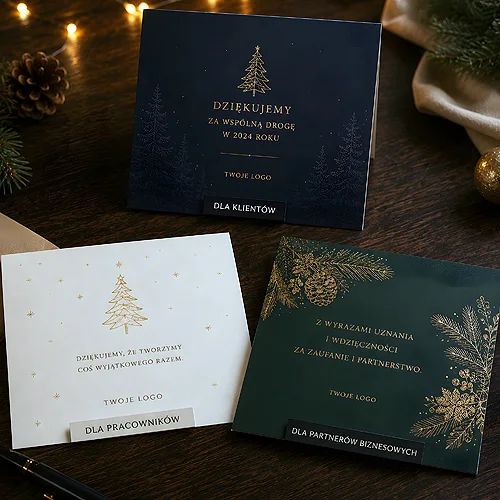
- Introduce brand elements subtly: a discreet logo, consistent colours and good paper, a tone that matches your brand.
- "Advertising" without selling means reminding people you exist, an excuse to reconnect in the new year, and a thank-you that builds loyalty.
- A gentle marketing accent - a small QR code or an event invitation - yes. A "-50%" coupon on a card - no.
- The effect is measured by the relationship: replies, a stronger brand, and the fact that people remember you.
Why a card works better than pushy advertising
Advertising usually asks for something - a click, a purchase, a sign-up. A Christmas card wants nothing. It simply wishes you well. That difference is huge, because the recipient does not raise a defensive wall - they receive kindness, and subconsciously attribute that kindness to your brand.
On top of that comes remembering the client. In December, inboxes swell with promotions that all look the same. A card sent specifically to that person, with their name on it, says something completely different: "we see you, you matter to us". Such a gesture stays in the mind far longer than another banner.
The effect is quiet, but lasting - a positive association. When, a few months later, that same client is choosing a supplier or partner, your brand comes back to them as a warm, not intrusive, memory. And that is the heart of subtle advertising.
Subtle brand elements - presence, not a shout
The art lies in making the brand felt without letting it dominate. The card should still look like a card, not like a business card with greetings tacked on. A few simple rules are enough to hit that tone.
- A discreet logo - best placed on the footer of the front or on the back. It should be a sign of who remembered, not the main character.
- Consistent colours and paper - a palette matching your identity and solid, pleasant-to-touch paper. Material quality is a direct image signal: a solid card speaks of a solid company.
- A tone that matches the brand - if you communicate warmly and humanly, let the wishes be the same. A stiff "with respect" formula in a relaxed company will feel out of place.
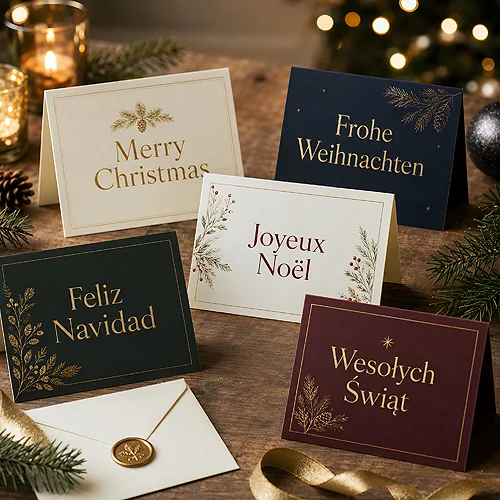
When these elements play together, the recipient does not think "I got an ad". They think "a nice company remembered me" - and that is exactly what we want. You will find ready formats and papers in our Christmas cards category, where it is easy to pick a version matching your brand character.
"Advertising" without selling - what a card really does
The best thing about a card is that it advertises without advertising. There is no offer or call to buy, yet it works for the brand on several levels at once.
- A reminder that the company exists - a gentle, friendly refresh of your presence in the client's mind, exactly when they are in a good, festive mood.
- An excuse to reconnect in the new year - wishes open doors. After the holidays it is far more natural to return to a conversation with "by the way, we exchanged season's greetings".
- A thank-you that builds loyalty - a simple "thank you for being with us" can do more for loyalty than many a discount, because it touches the relationship, not the wallet.
All of this happens without a single sentence about selling. A card does not close a transaction - it sustains the relationship from which transactions later follow, on their own.
Where to add a gentle marketing accent - with moderation
You can go a step further and weave in a subtle useful element, as long as it does not disturb the card's character. The key word is moderation - the accent should invite, not sell.
- A small QR code leading to an elegant year-in-review or a calm new-year offer - as a suggestion, not a nudge.
- An event invitation - a discreet mention of a meeting, open day or webinar you are hosting in the new year.
- A short address or contact details on the back, so a willing recipient can easily reach you.
What is better to avoid? Anything that smells of promotion. A huge "-50%", stickers with sale slogans, aggressive calls to buy. In this place and at this time of year, such things backfire - they spoil the mood you created yourself.
Try a simple test: cover the logo and read the card. If it still sounds like sincere wishes and not an announcement, you have hit the tone. If without the logo only an offer remains, that is a sign there is too much marketing.
When overdoing it ruins the effect
The most common mistake is a card that wants to be a flyer. When the wishes drown among advertising slogans, when the logo is bigger than the Christmas tree and the whole front shouts about a promotion - the gesture disappears and only the sell remains. The recipient senses this at once and reacts more coldly than to a plain ad, because they felt cheated by "pretend" kindness.
The second trap is too much content. A card does not have to tell the company's whole story or list your services. The less "selling" it carries, the stronger it works as a gesture. Trust simplicity - a few warm sentences, a discreet brand mark and solid production do more than a crowded design.
If you are looking for other materials that build relationships around the holidays, it is worth browsing our full product offer - a well-chosen little item often works like a card, quietly and over many months.
How to measure a card's value
A card is not judged like a sales campaign, because it is not meant to sell. Its value shows in the relationship - and that is how it is worth measuring, calmly and humanly.
- Replies and reactions - who wrote back, thanked you, called, or mentioned the card in the next conversation. That is the purest signal the gesture landed.
- A stronger brand - whether clients return more often, whether the relationship grows warmer, whether they remember you in the moments that count.
- Open doors - how many conversations in the new year began with a reference to the wishes. A card is often the first, soft "hello" before deeper cooperation.
A Christmas card does not close a sale - it opens a relationship. And from a good relationship, sales come later on their own.
So treat it as an investment in goodwill, not in conversion. If you want to see how such a tradition genuinely builds bonds with clients, take a look at the post on why corporate Christmas cards are a tradition that builds relationships. Subtle advertising is exactly this - a presence people like, not a message they run from.