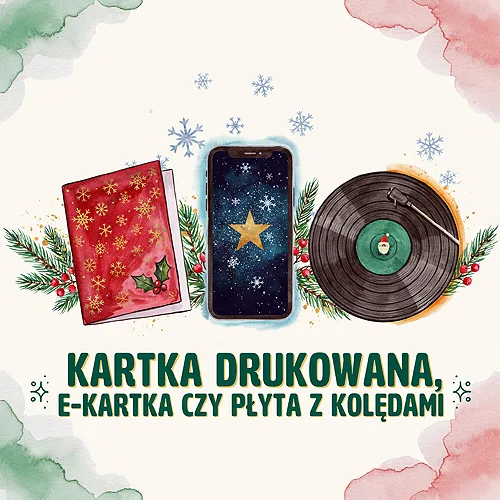
The end of the year is when companies say thank you - to clients, employees, partners. The trouble is that many gifts end up in a drawer or the bin before the holidays even start. The difference is made not by budget but by the idea: a gift that carries a personal touch and stays consistent with the brand is remembered far longer than an expensive gadget with no soul.
- A gift builds a relationship when it is personal and thoughtful - the gesture counts, not the price.
- Printed extras (a card, a calendar, a disc, an elegant branded set) leave a lasting, tangible trace of the brand.
- Match the gift to the group: differently for VIP clients, differently for employees, differently for partners.
- Start early - in autumn - and keep an eye on shipping logistics so you make it before the holidays without stress.
- Do not overdo the branding - a subtle logo works better than a gift plastered with advertising.
Why a printed extra makes the difference
In a world of emails and notifications, something physical stands out by its very form. A card is picked up, a calendar hung on the wall, a disc slipped into a player. These objects stay in the recipient's space and remind them of the brand without a single word of sales. It is exactly this tangibility that builds the relationship.
A printed extra has one more advantage: it gives the gift context. A gadget on its own can be anonymous, but a card with a handwritten signature or a calendar with a brand motif tells who sent it and why. That way the gift stops being a random object and becomes the gesture of a specific company.
There is also a difference in how we perceive the cost of a gesture. Electronic wishes are free and everyone knows it - which is why they are easy to ignore. Something printed and sent required a decision, a design, time. The recipient senses this and reads it as real engagement, not a reflex. That small signal of effort often means more than the contents of the parcel itself.
It is not the budget that decides whether a gift is remembered - it is the personal touch and consistency with the brand.
Printed extras worth considering
A card with a handwritten touch
The simplest, yet still one of the strongest gestures. A company card with a short, handwritten line shows there is a person behind the mailing, not an automated system. It is not about calligraphy - a signature or one personal word addressed to a specific recipient is enough. We wrote more about making a good impression with one in the piece on Christmas cards for companies, and you will find the whole range in the cards section.
A calendar
A gift that works through the entire coming year. A calendar with a brand motif hangs at the recipient's place for twelve months and, day after day, quietly reminds them of the brand. It is one of the few gifts the recipient actually uses, so it rarely ends up in a drawer. You will find more on choosing the type on the calendars page.
A disc with music or carols
An unusual, warm extra that builds a festive mood. A disc with music or carols, in an elegant sleeve with a logo, stands out against standard gifts and stays as something you can return to. It is an idea for brands that want to surprise subtly, rather than with yet another mug. We developed this theme in the piece on a CD with carols as a promotional gift.
An elegant branded set
A set of printed elements - a notebook, a calendar, a card, packaging - in a consistent graphic frame gives the impression of a well-considered whole. The key is a uniform motif: the same colours, the same style, a discreet logo. Such a set says more about the company than a single, random gadget.
Instead of one expensive item, consider a consistent, more modest set. Three well-designed, matching elements leave a better impression than one costly gadget with no idea behind it.
When choosing an extra, it helps to think about what the recipient will actually do with it. A calendar gets hung up, a notebook gets used, a card stands on the desk, a disc gets played. The more the gift fits into everyday activities, the longer it stays in their surroundings - and the more often it reminds them of the brand. An object that merely lies around soon disappears from view.
Personalisation and brand consistency
A gift works best when it looks like part of the company rather than a random object with a logo. Keep your brand colours, one graphic style and the same tone in your wishes - the way you speak to clients every day. Consistency makes even a small gift feel professional and thought through.
Personalisation is not only the logo. It is also tailoring the message to the recipient: different words for a long-standing client, different for a new partner, different for the team. The more the gift looks addressed to a specific person, the stronger it works - and the less often it lands without an echo.
This does not mean writing every card from scratch. A few message variants for your main audience groups and a small, hand-added touch where the relationship matters most are enough. That mix - a repeatable base plus an individual detail - creates the effect of a personal gesture without hours of extra work. It is a sensible compromise between scale and warmth.
Matching the gift to the audience
One gift for everyone rarely lands perfectly. It is worth dividing recipients into groups and matching the gesture to the relationship.
- VIP clients - here it pays to invest in quality and a personal touch: an elegant set, a hand-signed card, careful packaging. These are people you want a long relationship with.
- Employees - a gift that appreciates everyday work and builds a sense of belonging. Useful and personal things work well, with a warm word from the company.
- Partners and contractors - a professional gesture, consistent with the brand, that sustains the cooperation. A calendar or an elegant set work very well here.
You do not have to do something completely different for each group - it is enough to vary the details: the wording of the wishes, the finish, the level of personalisation. If you would like to talk it through and choose a set for your groups, simply get in touch.
Timing and shipping logistics
The best idea will not help if the gift arrives after the holidays. The end of the year is peak season in print and at courier companies, so a time buffer is worth its weight in gold. Start planning in autumn - you then have calm for design, approval, print and shipping.
Gather and verify addresses well in advance, because updating the database can take more time than the print itself. Decide too whether you are sending individually or in bulk to one location - this changes the packing and the schedule. The earlier you close the logistics, the less stress in December.
Think about the packaging too, and how the parcel will survive transit. An elegant gift that arrives crushed makes the opposite impression to the one intended. Sturdy packaging, consistent with the rest, protects the contents and is itself part of the experience - the moment of unwrapping is often the first thing the recipient remembers.
Set yourself an internal shipping date a few days ahead of the real deadline. That buffer saves you in case of design corrections, courier delays or a missing address.
How not to overdo the branding
The most common mistake with company gifts is too much advertising. A logo on every centimetre, sales slogans, huge lettering - it turns the gift into a flyer. The recipient then feels they have been handed an advertising medium rather than a present, and treats it like an ad: they put it aside or throw it away.
Restraint works better. A discreet logo, an elegant frame and personal wishes say more about the brand than pushy branding. The rule is simple: the gift should first please the recipient, and only in the background remind them who sent it. Then it stays on the desk, not in the bin.
A good test is a simple question: would I want to receive this gift if my logo were not on it? If the answer is yes, you are on the right track - the present stands on its own and the brand is just a pleasant note. If not, it is a sign that the advertising has covered the gift, and it is worth stepping back.
A short word to close
A good end-of-year gift is not a matter of budget but of attention. A printed extra with a personal touch, consistent with the brand and matched to the recipient, builds a relationship that outlasts a single season. Plan it early, take care of the logistics and choose class over the amount of advertising - and your gesture will truly be remembered.