A season has one unpleasant quality: it ends on a specific day, whether or not you made it in time. Festive packaging that arrives in mid-December works for two weeks instead of six. That is why, with seasonal and limited products, the calendar weighs exactly as much as the design itself.
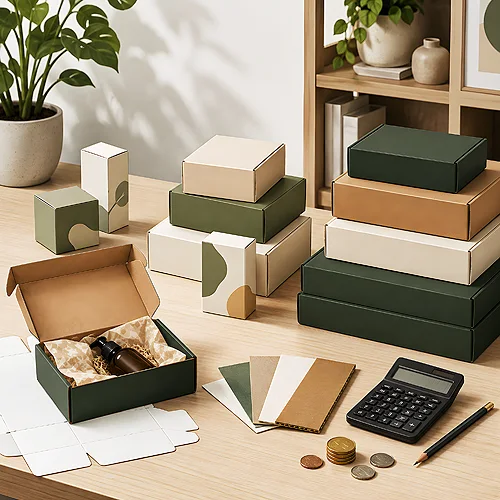
Short runs have changed the balance here. On the market a short-run contour is now cut straight from the file, without making a cutting die, so a version for a single season stops being an indulgence and becomes an ordinary sales tool. Below are the three things that decide it: when an edition really pays off, how to fit it into the calendar, and how to build an occasional version without rebuilding the whole package.
- A short run makes sense wherever the sales window has an end date known in advance.
- Plan the calendar backwards - from the first day of sales, not forwards from today.
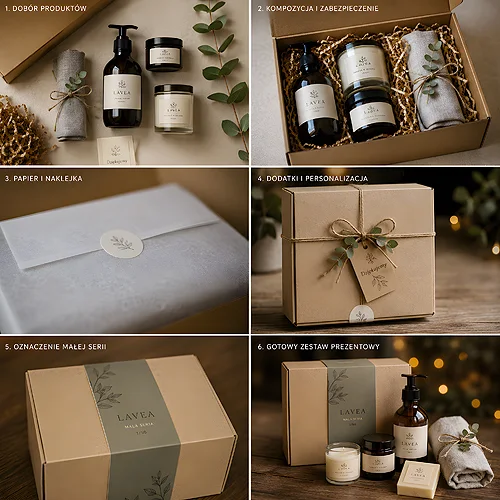
- Build the seasonal version as a layer on a fixed construction: the same shape, different artwork or a different closure.
- Size the run to the sales window, not to the warehouse - surplus loses value faster after a season than ordinary stock.
- A specific year on the packaging closes the door to selling the rest later; naming the time of year is usually enough.
- A repeatable rhythm of editions builds anticipation. A one-off shot usually passes unnoticed.
When a short edition really pays off
Not every product needs a seasonal version and not every occasion is worth one. What the situations where it works have in common is a natural limit: of time, of availability, or of both at once.
- An occasion with a date in the calendar - holidays, Valentine's Day, Mother's Day, the start of the school year, a local festival. The deadline is fixed, so the run is finite by nature.
- A limited raw material - honey from one harvest, beans from one batch, ceramics from one firing. The packaging simply reflects what is already exceptional.
- A collaboration with someone from outside - an illustrator, another brand, a local artist. A joint edition lives as long as the agreement to use the artwork.
- A launch or an anniversary - the first batch of a new product or a round company date. That is the moment when packaging has something to say, not just something to protect.
- A new visual direction - if you are considering a change of brand style, a limited edition is a safe place to show it without touching the core line.
The common denominator: the series ends by itself, so you do not have to find warehouse space for it for another year. Ready-made constructions you can base such an edition on are waiting in the packaging category for discs and releases.
The calendar: count backwards, not forwards
Most of the trouble with seasonal products comes from one habit - counting deadlines forwards from today. When time runs short that way, the stage that gets compressed is usually approval, which is exactly the one that needs calm. Reverse the direction.
- Start from the first day of sales - not from the date of the occasion itself. Customers buy gifts earlier, so the goods must be on the shelf well before the day.
- Step back for packing and photos - the product has to be put in its packaging, photographed and described before anyone sees it in the shop.
- Step back for producing the packaging - you confirm the actual time when ordering, but this is a stage no decision can shorten.
- Step back for design approval - with room for one round of corrections. That round happens almost always and is almost never budgeted for.
- Step back for file preparation - the cut and crease lines in a seasonal version are usually the same as in the basic one, so this stage can be shorter if you have a proven layout.
- Add a buffer at the end - a few days with no task assigned to them. Those are the days that save the whole schedule.
The sales window and what follows it
Before you set the run size, name two dates: the day the edition goes live and the day it stops making sense. Between them lies the sales window, and only that window counts. It is worth deciding straight away what happens to the remainder once the window closes - whether it goes on sale, joins a set, or ships as an extra with orders. A decision made early is usually wiser than one made in January, in a panic.
A seasonal version without a rebuild
The most expensive way to run an edition is to design it from scratch. The cheapest and fastest is to treat the season as a layer laid over what already works. The construction stays; what changes is what you can see.
What to change and what to keep
- Change the artwork and colour - a different palette and pattern on the same form are enough for the edition to read as separate.
- Change the closure - a band, a sleeve or a round sticker sealing the box is the cheapest seasonal layer you can add.
- Change the labelling - a different tag or hang tag instantly tidies up the display and makes the choice easier for the customer.
- Keep the shape and dimensions - the product then fits where it always does, and you do not have to check everything again.
- Keep the space for mandatory information - ingredients, markings, code. Moving them with every edition is asking for a mistake.
How heavily to decorate such a version is a separate decision - we write about what really helps sales in our post on minimalist versus richly decorated labels.
When designing the basic version of the packaging, leave one field in it earmarked for change - a stripe, a circle or a clear area that is neutral one time and festive the next. Every following edition then means swapping one element, not starting a new design. The rules for preparing a file for cutting are gathered in our file preparation section.
How much to order so you are not left with stock
With a seasonal edition, the run size is calculated differently than for the core line. It is not about how much you sell in a year, but how much you sell in the window. Take the sales from the same period last season, add a cautious margin and stop there. Ordering on the assumption that the surplus will come in handy later tends to backfire with a dated edition.
- Avoid a specific year on the packaging - naming the time of year or the edition leaves a way to sell the remainder next season.
- Separate the durable and the seasonal elements - you can have more basic boxes and fewer seasonal layers. The risk drops without losing the effect.
- Plan a second life for the surplus - sets, an extra with a larger order, packaging for samples. Anything is better than a shelf.
Limited should mean limited
A limited edition is a promise and customers do check it. If the same version returns for a third season in a row, the word stops working, and the whole mechanism goes with it. So it is worth deciding in advance what closes the edition: a number of units, a date, or the exhaustion of a batch of raw material. A clear edition mark, or even just a series name, helps a great deal - we write more about ways of marking in our post on marking series, editions and product variants.
The same logic applies beyond packaging. The mechanism of limited availability works across the whole offer and is clearly visible with collectible gadgets with a company logo, where the value comes precisely from the series coming to an end.
A rhythm rather than a one-off shot
Editions show their greatest value when they repeat. Two or three a year, at fixed moments, teach customers that it is worth looking in at certain times. Anticipation builds out of that, and along with it your own working rhythm: you know when preparations start and when the design has to be ready.
A short packaging run is therefore not only a way to handle a season. It is a way to give your brand moments in the calendar when it has something new to show - without rebuilding, every single time, what already works well.