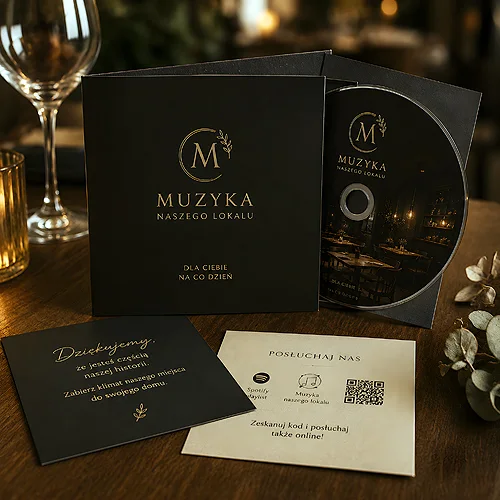
Music in a restaurant, a shop or a waiting room counts as public performance, not private listening. In Poland that involves fees paid to collecting societies such as ZAiKS or STOART. The same applies to a radio playing in the back room if customers can hear it.
Where a fee-free repertoire comes from
A collecting society represents the authors who have joined it and registered their works with it. Where the author of a recording belongs to no such organisation and has registered the music with none, there is no body collecting a fee on their behalf. That is the basis of music prepared specifically for playback in commercial spaces.
What to check
- Who wrote it - a fee-free repertoire means specific recordings by specific artists, not simply any music without a sleeve.
- The scope of rights - playing music in a venue is a different use from putting it in an advertisement or a film.
- Documentation - it is worth having in writing where the music came from and what it allows.
- Radio and streaming - a consumer service usually does not cover playback in a public space.
If you run a venue and want to put this in order, start by establishing what is playing today and where it came from. Every other decision follows easily from there.