Most packaging ends up in the bin within minutes of a parcel being opened. But some of it stays - on a desk, in a wardrobe, on a kitchen shelf. The box where you keep cables and odds and ends, the bag you take shopping, the case where you tuck away your glasses. Each of them once arrived with some order, and then simply turned out useful enough that nobody had the heart to throw it away.
For a brand, that is the ideal situation. Packaging that stays with the customer reminds them of you every day, without spending another penny on advertising. The point is not to force anyone to keep a box - the point is to design it so well that they will want to. Below we show how to do this in practice: from aesthetics and durability, through a second function, to a discreet way for the brand to be present.
- Reusable packaging is a free, long-lasting presence for your brand in the customer's home.
- Customers keep what is attractive, solid and versatile - not what shouts advertising.
- Design a second function: an organiser for small items, a gift box, a case for repeated use.
- Durability comes from the right material and finish - packaging has to survive more than one opening.
- Discreet branding works better than a huge print - subtlety lets the item fit any interior.
- A short, warm message inviting reuse rounds the whole thing off.
Why it pays to design for keeping
Ordinary packaging has one job: to deliver the product safely. Once you open it, it has done its part and lands in the bin. Reusable packaging has an extra job - to stay. And if it stays, that means your brand name sits somewhere in the customer's home for weeks or months.
It is the cheapest advertising there is. You do not pay for a placement, you do not fight for attention in a crowded feed. Something the customer set out on display works quietly and for a long time. On top of that comes the impression of quality: a brand that packs into something considered and solid instantly seems more serious. Gift packaging follows slightly different rules than purely transport packaging - we write more about those differences in our post on the differences between shipping and gift packaging.
Four qualities that stop a customer throwing it away
Not every package has a chance of staying. The ones that do usually share a few traits. It is worth designing them deliberately rather than counting on luck.
- Aesthetics - something attractive in itself has a better chance of a second life. Calm colours, a clean layout, paper that is pleasant to the touch. Something that fits the interior, rather than something you have to hide.
- Solidity - thin card that buckles on the first opening lands in the bin without a second thought. A rigid box, a strong seal, a decent material build the feeling that this is something to keep.
- Versatility - the less the packaging is tied to a single product, the more easily it finds a new use. A neutral shape and format let a box suit trinkets, jewellery, cables or keepsakes.
- Discreet branding - a huge advertising print works against its own intention. A customer will not put something that looks like a billboard on a shelf. A small, elegant logo stays, a loud advert does not.
Run a simple imagination test: would you put this packaging on your own desk, on display? If so - the design is good. If you would have to hide it because it shouts advertising too much, it is worth toning down the print and betting on the quality of the material.
Design a second function
The most effective way to make packaging stay is to give it a second life right there in the design. When a box or bag naturally lends itself to something more, the customer does not have to wonder what to do with it - the answer is obvious.
Organiser and container for small items
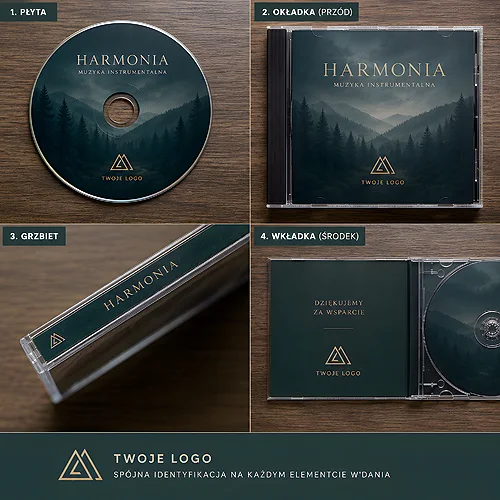
A rigid box with a neutral interior practically begs to hold paper clips, chargers, memory cards or jewellery. If the product calls for it, an insert shaped to fit can be designed so that once the goods are removed, a convenient empty space is left for the customer's own things. The same applies to packaging for discs and media - an elegant case works beautifully afterwards as a box for small keepsakes.
A gift box for reuse
An attractive box with a proper closure naturally becomes gift packaging. A customer who received their purchase in it will happily use it later, wrapping a present for someone else - and then your brand travels out into the world once more, this time in someone else's hands. How the product is arranged inside strongly influences that impression; we write more about it in our post on the effect of product arrangement in a box on perceived value.
A case for repeated wear
A case is by definition an object for repeated use - it protects whatever is carried in it, day after day. If you design it with durability and aesthetics in mind, the customer will use it long after they have forgotten the purchase itself. More natural materials, in an eco spirit, work well here - light, pleasant and good to the touch. That is the spirit of our EKO card and receipt sleeves: cardboard pockets in Kraftliner, Kazan or Flora that stay in the wallet alongside the card.
Material and finish that serve durability
Packaging designed to be kept has to survive more than one opening. Here the choice of material and finish decides. A few principles worth keeping in the back of your mind.
- The right weight - the heavier the product and the longer the packaging is meant to live, the more solid the card. Rigidity is the foundation of the impression of durability.
- A touch-resistant finish - a surface that does not scuff or catch fingerprints looks good for longer. Matt is often more practical here than high gloss.
- Strong closures - flaps, bands and slots you can open and close many times are more valuable than a one-off permanent seal.
- Natural texture - paper with a tangible structure or dyed throughout looks more valuable straight away and ages well. We write about how to play with texture in our post on natural paper texture as a design element.
If you are not sure which paper and finish will work in your case, it is worth checking the materials and papers section - you will find hints there that help match the stock to the planned way of use.
A discreet message that invites reuse
Sometimes a single sentence is enough to make the customer see the box differently. A short, warm message - on the inside of the lid or on the base - can gently suggest that this packaging is fit for a longer life. Rather than a command, an invitation works better: a proposal to stash small items inside or to pass the box on with a gift.
Such a message fulfils two roles at once. First, it genuinely plants an idea for a second use. Second, it builds the image of a brand that is aware and attentive, one that thinks about what happens to the packaging after delivery. For many customers, that gesture is exactly what tips the balance - and makes the box stay. The only thing that matters is keeping the tone light and positive, without scaring or moralising. You show the value, you do not point fingers.
How to approach it step by step
Designing packaging that is too good to throw away can be broken into a few simple stages. It is worth going through them in order, rather than deciding everything at once.
- Define the second life - decide what the packaging is to become after unpacking: an organiser, a gift box, a case. This sets up the rest of the design.
- Choose the format and shape - neutral and versatile, so that it suits the imagined second function, not just a single product.
- Pick the material for durability - weight, texture and finish matched to the weight of the goods and the planned lifespan of the packaging.
- Quiet the branding - a small, elegant logo, calm colours, so the item fits the customer's interior.
- Add a warm message - one sentence inviting reuse, placed discreetly.
Once you have the idea ready, it is worth taking care of preparing the print files correctly - you will find hints in the file preparation section. The rest follows naturally: packaging that looks good, serves well and reminds of the brand without being pushy stays with the customer on its own. And every day it sits on their desk works for you for free.