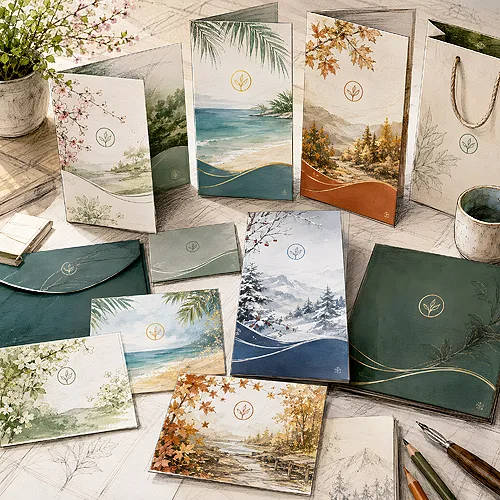
The best advertising is not the one that shouts loudest - it is the one people reach for themselves, several times a day. A pen on the desk, a mug beside the keyboard, a notebook in the bag, a flash drive in a pocket: each of these is a quiet, repeatable point of contact with your brand. A well thought out gadget does not end up in a drawer - it stays in the daily routine and keeps working long after an ordinary flyer would have gone in the bin.
- Advertising that gets used beats advertising that gets glanced at - real usefulness is what counts.
- An everyday item is a repeatable point of contact: it is at hand, visible and carries positive associations.
- Branding should be subtle and tasteful, consistent with your identity, not loud.
- Match the item to the audience and the industry - a different gadget works in an office than in hospitality.
- Build quality shapes the impression of your brand more than the logo itself.
Why an everyday item beats classic advertising
Ordinary advertising fights for attention for a fraction of a second and then disappears. A useful object works differently - it stays. When someone writes with your pen during a meeting or drinks their morning coffee from your mug, the brand is present in the background, without pushiness and without the feeling that someone is selling something.
That changes the nature of the contact. The recipient does not see the gadget as an advert but as something useful they were given by you. Gratitude and convenience build a positive association, and that stays with the brand far longer than any slogan.
There is also the bystander effect. A notebook on a conference table, a bag carried through the city, a mug on a shared desk - other people see them too. One well designed item can work for a brand in many places at once.
Rule number one: usefulness before the logo
The most common mistake is thinking from the logo rather than from the person. A gadget nobody wants to keep on their desk will advertise nothing - it will end up in a drawer. So the first question is: does this item genuinely make someone's day easier?
A good advertising medium is first of all a good object. A pen that writes pleasantly. A mug you want to drink from. A notebook in a format that fits your bag. When the thing is convenient, the recipient uses it of their own accord - which means they see the logo every day, all by themselves.
Before you choose a gadget, picture a specific person from your target group and their day. If you cannot name the moment when they will actually reach for the item, it is not the right choice yet.
Subtle branding instead of shouting
Today's recipient does not want to carry a billboard around. The branding that works best is restrained: a logo of reasonable size, in a calm spot, in the colours of your identity. The item should look elegant on its own, with the brand present like a discreet signature rather than an advertising sticker.
Aesthetics build trust. A gadget that looks good is more likely to make it onto a desk, into a handbag or to a meeting - and that is where it shows itself to the world. A loud print does the opposite: it ends up out of sight, because the owner is slightly embarrassed by it. Even where the technique allows a lot - as with digital UV printing on the plastic TEK - the logo alone in your brand colours works better than a barrel covered with artwork.
- Logo scale - a smaller, discreet mark usually looks more premium than a large print across the whole surface.
- Placement - the side of a mug, a pen clip, the corner of a notebook, the underside of a coaster: the mark where it does not disturb the function.
- Colours - stick to the palette from your brand book, do not add random accents.
- Technique - laser engraving on metal or a muted UV print on plastic often look more refined than heavy full colour.
The recipient will not remember that they received an advert. They will remember they received something they genuinely use - and that it came from you.
Match the item to the audience and the industry
There is no single universal gadget. The same budget will work completely differently in a law firm, a cafe and a technology company. The trick is to make the item fit the daily life of a specific group.
Office and professional services
Here what works is what sits on the desk and accompanies work: an elegant pen with discreet engraving, a notebook, a mouse pad, a document folder. Items visible during meetings build the impression of a solid, organised brand.
Hospitality and retail
In a cafe or restaurant an everyday item becomes part of the guest experience - a mug, a coaster, a shopping bag with a logo. Something the customer takes home extends the contact with the venue far beyond its doors. On the table that role belongs to a cup coaster with the venue logo: it sits by every drink and asks nothing of the guest.
Conferences, events and technology companies
At trade shows and events the items that people actually carry work best. A branded flash drive with a logo is useful and visible every time the owner uses it - a brand carrier that literally travels the world with the recipient.
How to choose the item and design the print
Choosing a good advertising medium is a handful of calm decisions, not a lottery. It is worth going through them in order before anything reaches production.
- Define the audience - who receives the item and at which moment they reach for it.
- Match the function to the situation - what that person really does during the day and what helps them.
- Plan the branding - one logo, a clear hierarchy, colours from your identity, a spot that does not disturb the function.
- Keep it consistent - the gadget should look like part of the same family as your business card, letterhead and website.
- Prepare the file properly - the right curves, colours and bleeds save time and corrections; see our guide on preparing files for print.
Consistency is the secret that is easy to forget. A gadget does not exist in a vacuum - it works most strongly when it is an extension of the whole identity. The same typeface, the same palette, the same character as the rest of your materials help the recipient assemble every point of contact into one coherent picture of the brand.
Treat the gadget as one element of a set, not a separate project. A pen, notebook and mouse pad in the same style make a far better impression than single, random items from different worlds.
From idea to a finished set
Turning an everyday item into an advertising medium does not require a huge budget - it requires an idea and consistency. Start with one well thought out thing, matched to your audience, marked with class and consistent with the rest of the brand. That works better than ten random gadgets at once.
If you want to see what such a set can be built from, take a look at our pens, flash drives and lighters and choose what will genuinely land in your customer's hand. The rest - the design, the branding, the print preparation - is a path we will walk together.
You will find more practical tips in our pieces on why a gadget's usefulness matters more than a low price, and on how printed coasters combine decoration with advertising.