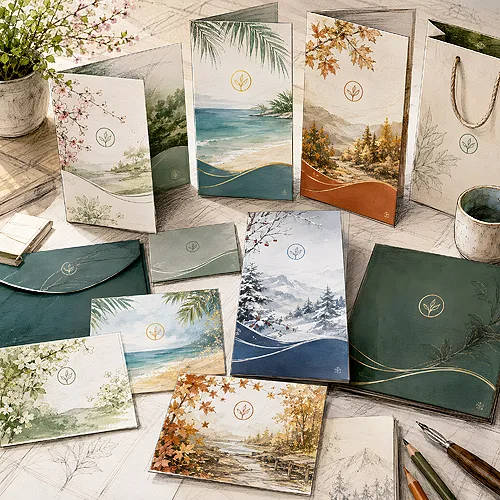
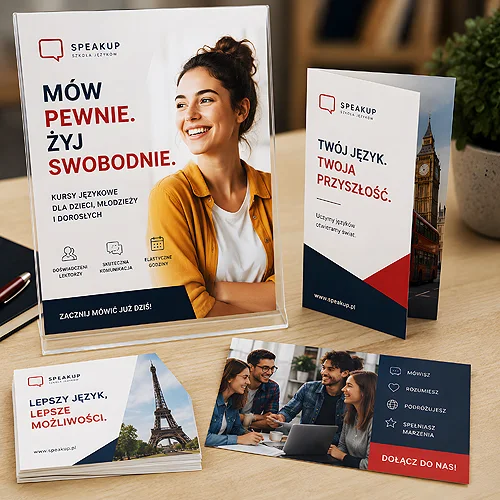
Picture one person over the course of a week. On Monday they pass your poster at a bus stop. On Tuesday they get a flyer and a branded pen from you. On Thursday they see your post on Instagram. It is still the same person - and if they see a consistent picture of your brand every time, they start to trust you. That is exactly what combining print, promo gadgets and digital content into one campaign is all about.
- The same person meets your brand many times - in print, in hand and online. Consistency makes these contacts add up instead of scattering.
- Each channel has a different role: print builds reach and trust, the gadget reminds people every day, digital content closes the deal and deepens the relationship.
- The glue that holds it together is one leading idea: a shared slogan, colours and logo on everything.
- The bridges between worlds are usually a QR code, a hashtag or a simple web address - they lead from paper to screen.
- It pays to plan with one goal, a shared calendar and simple measurement, so you know what actually worked.
Why one channel is not enough
You can make a great flyer and stop there. You can run only online ads. Both approaches work - just weaker than they could. People rarely decide after the first contact: they need to see a brand several times, in different situations, before they treat it as their own.
When print, gadget and digital content speak with one voice, every new contact adds a brick to the same house. The customer does not start from scratch each time - they see the same colour, the same slogan, the same character and subconsciously connect the dots. That is the difference between single shots and a well thought out campaign.
Three channels, three different roles
The biggest mistake is treating every channel the same way. They do not duplicate each other - they complement each other, because each does something the others cannot.
Print - first contact and trust
Print gives physical reach where the internet does not go: on the street, in a shop window, at a trade fair, in a mailbox. Something you can touch inspires a different kind of trust than a banner on a screen. A good business card on elegant paper or a clear promotional flyer is often the first real contact with a brand - and a first impression that is hard to change later.
Gadget - everyday presence
A gadget stays around longer. A pen, a lighter or a USB drive with your logo does not land in the bin like a flyer - it sits on a desk, rides in a backpack, comes back to hand every day. It is a quiet, friendly reminder of the brand. And something genuinely useful builds fondness - the shortest road to loyalty.
Digital - details, conversion and relationship
Digital content - website, social media, video - does what print has no room for: it shows details, answers questions, collects sign-ups, leads to a purchase. This is where the customer looks at photos, reads reviews and makes a decision. Digital closes what print and the gadget began in the real world.
One campaign, one leading idea
Consistency starts with a single thought that you repeat everywhere. It can be a slogan, a visual motif or a colour - as long as there is one and it keeps coming back on every element.
- A shared motif and slogan - one sentence from the poster, through the gadget, to the footer of a post. The customer hears it so many times that they start to remember it.
- The same colours - the same palette on the flyer, on the website and on the gadget packaging. We recognise colour faster than words.
- The logo the same everywhere - the same version and proportions, no improvising on each medium.
- One tone of voice - if on the website you speak to the customer warmly, the flyer cannot sound like an official letter.
Think of it like a band. Each instrument plays a different part, but they all stick to the same melody. When one starts playing its own thing, the whole song falls apart.
Bridges between the physical and digital world
The real magic happens where paper meets screen. You want someone holding your flyer to jump to the website in one move. That is exactly what bridges do - they connect what is in hand with what is online.
- QR code - the simplest option. On a flyer, poster or a sticker on a gadget, it leads straight to a website, a form or a video. One point of the camera and the customer is with you online.
- A dedicated address or landing page - a short, easy-to-remember address just for this campaign. It looks great in print and instantly tells you how many people came through it.
- Hashtag - one shared word with a hash sign brings together all the posts, customer photos and your own posts in one place.
- A USB drive with materials - handed out at a fair or attached to an offer, a branded USB drive carries a presentation, catalogue or film inside. A physical object with full digital content within.
Before you print a QR code on a thousand flyers, scan it yourself - from different phones and in different light. Check that it leads where it should, and that the page on the other side looks good on mobile. A code that does not work on paper is worse than none at all.
The customer journey step by step
The easiest way to see this is with an example. Let us follow one person who runs into a well-planned campaign.
- They notice - they pass a poster or get a flyer in hand. Something catches the eye: a colour, a slogan, a promise.
- They check - they scan the QR code or type in the short address and reach a website where they learn more and can sign up or buy.
- They get something in hand - on their first visit or order you add a branded gadget. That small thing stays with the customer for weeks.
- They come back in their thoughts - the gadget on the desk reminds them of the brand, and your posts keep the relationship alive until the customer is ready to return.
No single element does all the work. The poster alone will not sell, but it starts things. The gadget will not explain the offer, but it reminds. The website will not reach people on the street, but it closes the deal. Together they form a loop that draws people in and keeps them.
Planning: one goal, a calendar, simple measurement
A coherent campaign does not happen by chance. It pays to settle a few things before you start that will save a lot of mess later.
- One goal - sign-ups for an event, sales of a product, recognition in the neighbourhood. One goal orders every decision.
- A shared calendar - when print goes out, when you hand out gadgets, when you publish posts. Everything should overlap, not miss each other.
- Consistent content - prepare the slogan, colours and copy once, then carry them onto every medium.
- Simple measurement - a separate QR code or address for each channel shows where people came from. You do not need complicated tools, it is enough to know what worked.
Two real-life examples
A small neighbourhood café. Leading theme: "Your morning tastes better with us". Posters in the window and promotional flyers around the area with a QR code to a page with the menu and a map. On every takeaway coffee, a sticker with the slogan and the Instagram handle. Online: photos of regular guests under a shared hashtag. The same colour, the same slogan, three channels - one atmosphere.
An event or conference. Invitations and the programme in print, consistent graphics on stage and at the stands. Attendees get a branded USB drive with presentations and materials - a physical keepsake with digital content inside. A QR code on the badge leads to the agenda and a feedback form. After the event, a photo gallery and thank-yous online, under the same hashtag. This way the event lives on long after the last talk.
It is not about being everywhere. It is about sounding the same everywhere.
Where to start
If this is your first campaign like this, you do not have to do everything at once. Choose one goal, one slogan and three carriers: something in print, one gadget and one place online. Make sure they share a colour, a logo and a bridge between worlds - even a single QR code. That is already a coherent campaign.
Along the way it helps to have everything from one place - browse our product catalogue and pick print and gadgets that match each other. Want to see it on a smaller scale? Take a look at the post on how to combine a USB drive, a flyer and a business card into a ready promotional set. And if you are wondering how much to bet on print versus the internet, the piece on what works better in local advertising - print, social or both channels at once will help. The greatest strength lies not in any single element, but in the fact that they all point the same way.