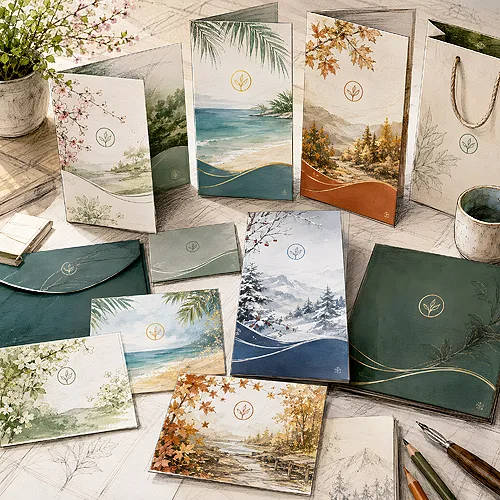
The best campaigns are not built a week before the push. They are built in winter, over a cup of tea, when you calmly map the whole year into seasons and know that come November nobody will be frantically searching for a printer. Printed advertising - flyers, posters, insert materials, gadgets - needs lead time, and lead time comes from a plan.
A seasonal campaign is simply matching your message to the rhythm of the year. Customers buy differently in January, differently before the holidays, and differently again in December. If your materials keep pace with that rhythm, they arrive at the moment the recipient is ready to listen. Below we show how to put such a yearly plan together step by step - from splitting the year into seasons, through the print schedule, to tying everything into one coherent system.
- Split the year into 4-6 sales seasons matched to your industry, not to a calendar off the shelf.
- Assign each season a goal, an audience and a set of printed materials.
- Plan backwards from the campaign date - print and shipping need a buffer you cannot make up later.
- Keep one visual system for the whole year and change only the seasonal accents.
- Order materials in batches ahead of time, rather than firefighting a week before the start.
Start with a map of seasons
Before you order anything, sketch out the year. This is not about a calendar full of holidays, but about your own sales rhythm. A gift shop comes alive in autumn and December, a renovation company in spring, hospitality places its accents differently than a beauty salon. Your job is to name these waves and assign materials to them.
It helps to start with a simple question: when do customers naturally want what you sell? Those moments become the core of the campaign. The rest of the year is time to build recognition and keep in touch, so that at the peak of the season the brand is already familiar.
- Peak seasons - two or three periods a year when demand is highest. This is where you invest the most materials and attention.
- Warm-up seasons - a few weeks before the peak, when you remind people about yourself and build up interest.
- Quiet periods - time for loyalty actions, testing new ideas and preparing materials for the next wave.
Assign a goal and materials to each season
A season without a goal is just a date in the calendar. For each wave, decide what you want to achieve - win new customers, come back to old ones, promote a specific product line. The goal tells you which printed materials make the most sense.
Matching the medium to the task
Not every season needs the same set. A short local action holds up on flyers and posters, while a relationship-building campaign benefits from materials the customer wants to keep.
- Flyers - a fast, flexible medium for promotions and handing out at your point of sale. Check the range of advertising flyers when you want to reach wide and affordably.
- Folded flyers - when you have more to say: a seasonal offer, a price list of services, a mini catalogue. Folded flyers hold a story, not just a slogan.
- Insert materials - inserts, discount cards and vouchers that travel with the order and invite the next purchase.
- Gadgets and calendars - media for quiet periods and the year's end that stay with the customer longer and work for months. Calendar heads and backing boards are priced in the calculator, while a finished calendar with a date grid we put together to individual order.
If you want your shipping materials to truly sell, it is worth reading our post on how flyers inserted into parcels work - one of the simplest ways to keep a quiet stretch of the year working for you.
For each season, write one sentence: who should receive the material, where and to what end. If you cannot finish it, that is a sign the action is not yet thought through - better to refine the plan now than to explain the chaos at the peak of the season.
Plan backwards from the campaign date
The biggest mistake in seasonal campaigns is counting time forwards. You think "I will order at my leisure", and the campaign date arrives faster than it seems. So count backwards: from the day the material must be in the customer's hands, you step back through shipping, printing, design approval and file preparation.
- Set the campaign date - the day the campaign launches and the materials must already be working.
- Subtract time for distribution - shipping, door drops or setting up at the point of sale.
- Subtract time for printing - production needs its own window, especially with larger runs and finishes.
- Subtract time for design and files - graphic approval, text proofreading, preparing print-ready files.
- Note the work start date - this is your real deadline to begin, not to send the order.
This simple sum protects you from the nerves. Once you map it out for your most important season, you will see that work has to start much earlier than intuition suggests. Before you send the files, it is worth checking our guide on preparing files to make sure everything is print-ready - a correction caught at this stage costs the least.
Planning ahead pays off especially before the year's end, when the most orders reach the printer at once. You will find more on calmly arranging this period in our post on how to plan holiday printing without the stress.
One visual system, seasonal accents
A yearly campaign has one great advantage: you can design a coherent system once and use it all year. A customer who sees your flyer in spring, your poster in summer and your calendar in winter should immediately recognise it as the same brand. Coherence builds trust more strongly than a single striking graphic.
Set the constants - the logo, the brand palette, the typeface, the way you present the offer - and keep them across all materials. Introduce seasonality through accents: warmer shades in autumn, lighter ones in summer, a festive detail in December. The mood changes, not the identity. That way every new material reinforces the previous ones instead of starting from scratch.
If you want your materials not to land straight in the bin, it is worth reading how to create advertising materials customers gladly take - the same principles work in every season.
Order in batches and keep a reserve
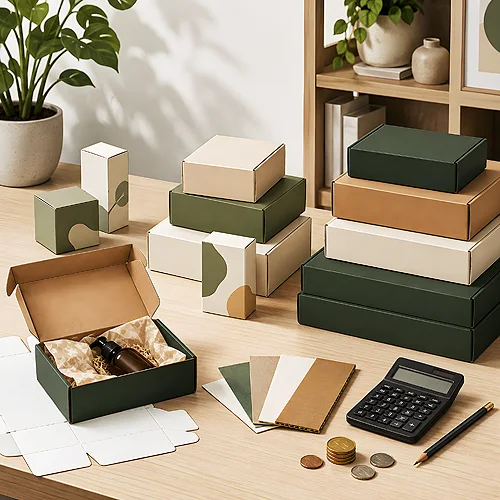
The final pillar of the yearly plan is how you order. Instead of placing a separate order a week before each action, spread the printing across batches and order ahead of time. Timeless materials - those without specific dates - can be prepared in reserve and used all year.
- Fixed materials - business cards, folders, letterhead or neutral flyers about your offer, order once in a larger run. You reach for them whenever needed.
- Seasonal materials - those with dates and action slogans, order in batches matched to specific waves.
- Safety reserve - add a small margin to every run, because a good action can surprise you with its scale.
You will find the full range of media in our product catalogue - from printed classics to calendars and gadgets for the year's end. It is worth browsing at the planning stage, so you know right away what to order and when.
A printed campaign for the whole year does not need a bigger budget than a string of chaotic actions - it needs one good plan instead. Map the seasons, assign them goals and materials, count time backwards and keep a coherent system. The rest of the year will simply be calmly carrying out what you decided in winter over tea.