You run a small business with a modest promotion budget, and the list of possible promotional items seems endless? Relax - you do not have to order everything at once. The trick is to start with things that give the most for reasonable money, and only then add more. In this post we guide you step by step: where to start, when it is worth adding a pen drive, how to choose wisely and what to avoid. No prices, but practical priorities that work well in a small business.
- Do not order everything at once - set priorities and start with things that give the most for a reasonable spend.
- The foundation is business cards and good pens - cheap per contact and useful to everyone.
- Add a pen drive where it should make an impression - for important clients and partners, not to hand out by the handful.
- Choose wisely: usefulness, quality and a clearly visible logo - three things that decide whether an item makes sense.
Start with what gives the most
On a limited budget the key question is not "what would be nice", but "what gives the most effect for the money". So instead of spreading funds across many different trinkets, it is worth starting with a few things that work for the company reliably and reach every recipient.
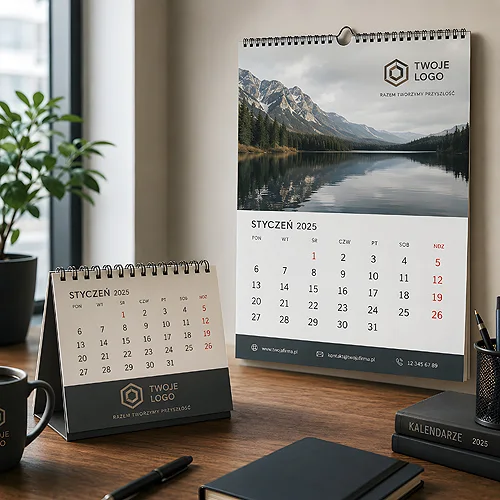
At the very top of the list are business cards. This is the cheapest way to leave a trace with your name, contact and logo. Classic business cards are useful literally always - at a meeting, a trade fair, during a chat with a client. One small card can do more than many a pricier item, because it holds what matters most: how to reach you.
Right next to them are pens. It sounds trivial, but that is exactly why they work - we use them every day, and every use is a contact with your brand. Cosmo engraved pens are cheap per piece, yet practical and welcome. A client rarely throws away a pen that writes well - it stays on the desk and reminds them of the company for weeks.
Before you order anything, ask yourself a simple question: will the recipient use it? If yes - the item will work for the brand. If you can already picture it landing in a drawer or bin, skip it and spend the budget on something that really stays in the client's hands.
When to add a pen drive
Once you have the foundation, it is time for a higher-shelf item - one meant to make an impression. A pen drive fits perfectly here. It is useful, durable and feels solid, so the recipient treats it like a real gift, not a throwaway trinket.
Strategy is key, though. A pen drive is not an item to hand out by the handful at a fair. It is a tool for important contacts: key clients, partners, people you want a longer relationship with. A Twister printed pen drive handed over at such a moment stays for a long time - and your logo travels with it from desk to bag for months.
This way of splitting the budget makes sense: cheap and useful things for everyone, a standout item for the chosen few. Thanks to that you do not burn funds on expensive gifts for random people, and at the same time you have something to make a good impression where it really matters.
Better to give one important person something they remember than to hand out a hundred trinkets no one notices. An item's value is measured by effect, not by the number of pieces.
How to choose wisely
Regardless of the budget, a good promotional item meets three conditions at once. When you look at anything to order, check these three things - and only then decide.
Usefulness. This is the most important. An item the client uses advertises the company every time they reach for it. A thing that is good for nothing disappears at once - however flashy. Always choose usefulness over forced cleverness.
We write more about choosing items that meet the recipient's needs in the post on how to choose promotional items your clients will actually use.
Quality. A cheap item that breaks after a week harms the company - the client transfers that impression to the whole brand. Better to order fewer pieces, but solid ones that will serve long. A sturdy thing advertises not only longer, but also better.
Visible logo. An item is meant to advertise, so your mark must be legible and well placed. A logo that is hidden or barely visible is a wasted chance. Make sure that, during normal use, someone really sees whose company it is.
Instead of asking "how many items you can buy for the budget", ask "how long each of them will work for the company". That second question leads to durable and useful things, not to a pile of junk you have to give away fast because it is taking up storage space.
How to arrange it in practice
Theory is theory, but with a real budget a simple action plan helps. Set the order in which you add items, and stick to it, instead of buying everything at once on impulse.
Start with the foundation that pays off from day one: business cards and good pens. These reach clients most often and repay themselves fastest in contacts. Only once you have them ordered, move on to a higher-shelf item - like a pen drive - and set it aside for selected, important people. For that one selected item the usual pick is the Twister - the swivel connector has no cap to lose, and you can do either print or engraving on the very same model.
Add further steps when the budget allows and when you see a concrete need. There is no point ordering something in reserve if you do not yet know to whom and when you will give it. Such calm, staged buying means every item has its place and really works, instead of sitting in a box.
What to avoid
On a small budget it is easy to fall into a few traps that eat money without effect. It is worth knowing them in advance, so you do not learn from your own mistakes.
The first is spreading the budget across too many different items at once. Better to have two or three things done properly than ten mediocre ones. The second trap is buying the cheapest things because "you get a lot for little" - junk breaks fast and spoils your image, so the saving turns out to be an illusion.
The third is items detached from what the company does and who its clients are. A flashy trinket that does not fit the recipient simply does not land with them. Before you order anything, think whether your client will really use it - that one question protects you from most misfired purchases.
If you are building a set of materials from scratch, the broader post on how to choose the best advertising materials for a small business will help. And when you are ready to place a specific order, visit the products section or write to us through the contact form - we will help set priorities so that every zloty of the budget really works for your company.