The autumn preserving season and the upcoming holidays are a time when jars of jam, liqueurs, and homemade cosmetics start to serve as gifts. The problem is that a nice label that blurs with the first contact with the fridge or peels off after washing the jar can ruin the whole effect. In this article, we show which material and which glue really withstand moisture, frost, and everyday use.
- PP foil - the best choice for preserves kept in the fridge, resistant to water, grease, and chemicals.
- Semi-gloss paper - works well for honey and dry products, but does not tolerate moisture.
- Condensation resistant glue - necessary if the label is to survive the freezer.
- Removable glue - choose it for returnable jars that are expected to come back clean.
- Font min. 1.2 mm - a legal requirement for food labels with ingredients and producer data.
What materials are best for labels on jars and bottles?
Before you choose a material, ask yourself: where will the label live for the next months? On a shelf in a pantry is a completely different story than in a freezer or a damp cellar. Print shops that deal with food labels usually use three groups of materials depending on their intended use, and it's worth knowing them to avoid buying something that only looks good in the product photo.
- Semi-gloss paper - a classic for honey, tea, and dry preserves that do not come in contact with moisture. Cheap, prints nicely, but reacts poorly to condensation.
- Premium textured paper - for artisanal products where tactile impression counts. The rough texture gives a handmade effect, ideal for holiday gifts.
- PP foil (polypropylene) - resistant to water, grease, and chemicals such as salts, acids, or alcohols, and tends to stretch rather than tear under greater tension. This material is for jams, meat preserves, and everything that goes into the fridge.
- Synthetic or wine paper - a waterproof equivalent of paper, often used where a paper look is desired but the product will be washed or cooled.
- Polyester foil (PET) - resistant to moisture, rain, sweat, and mild chemical sprays, and can withstand low temperatures. This material is chosen where the label must survive truly harsh conditions, such as transport in a refrigerated truck.
Regular paper, without coating and lamination, is not very resistant to moisture and mechanical damage. If you are making labels for preserves that will be stored in the fridge for more than a week, it's simply a bad choice, no matter how beautifully designed it is.
What glue to choose so that the label doesn't fall off in the fridge or cellar?
Material is one thing, but glue determines whether the label will even last until the product is consumed. There are three situations worth distinguishing.
Permanent glue works well when the label is meant to stay on the jar forever, with no plans for recycling the packaging. This is standard for one-time preserves for sale or as gifts.
Washable glue, also called removable, is used for returnable packaging, such as reusable jars. Such a label can be removed entirely under running water, without leaving glue residues on the glass. If someone collects jars after preserves and wants to return them clean, this type of glue solves the problem.
Cold temperature resistant glue is a topic that is often overlooked during the first order. For products stored in the fridge or freezer, a condensation-resistant glue is needed, because ordinary glue simply releases when water vapor collects on the jar. Acrylic glue, used in vinyl labels with lamination, adheres to glass even under strong condensation and does not peel off in the cold, making it a good choice for honey, jams, and natural cosmetics kept in cooler environments.
If you are unsure how long and in what conditions the label will be used, assume the worst-case scenario: moisture, washing, cooling. A material resistant to tougher conditions will always cope with easier ones, but not the other way around.
How to match a label to the type of product: preserves, liqueurs, cosmetics, and oils?
Not every label fits every jar, even if the material is technically waterproof. When it comes to food preserves, you have to remember about the legal requirement: according to EU regulation 1169/2011, mandatory information on the label, such as the ingredients or producer data, must be printed in a font with a minimum height of 1.2 mm for a lowercase x. This is not a suggestion but a rule that is worth considering already at the design stage, before the files go to print.
With liqueurs, the aesthetics of the bottle matter as much as durability. Personalized labels for liqueurs in the Polish market start at small amounts per piece for smaller runs, and for larger orders, the unit price clearly drops, which is important if you plan to give away several dozen bottles as Christmas gifts.
Craft cosmetics, oils, and balms are a separate category, as contact with fat and essential oils quickly reveals weak materials. PP foil or coated materials with a pearl finish, also used for elegant beverages and alcohols, work well here. If you care about a natural, raw look without losing functionality, it's worth checking the section eco labels printed on natural paper, which blend well with artisanal cosmetics and cold-pressed oils.
Foil labels have one more advantage with kitchen preserves: they can be wiped with a damp cloth without fear of smearing the print or peeling corners, which is invaluable for jars standing close to the stove.
How to give labels an autumn, rustic character for holiday gifts?
Functionality is one thing, but in autumn and during the holiday season, the label also serves as gift packaging. Here, finishes come into play that change the perception of the product before anyone even tries the contents of the jar.
Selective UV varnish gives the label gloss and protects the print from abrasion, which makes sense for labels on bottles passed hand to hand, for example, when handing over a liqueur at a family gathering.
Matte foil works the opposite: it muted colors, gives a subdued and elegant effect, often chosen for natural cosmetics and premium products, where minimalism counts.
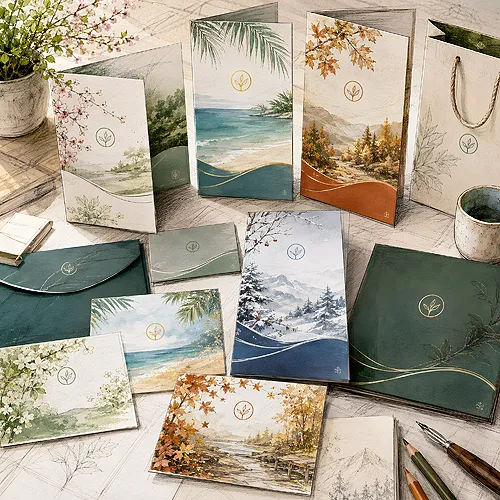
Rustic effect is usually a combination of textured paper with simple typography and a muted color palette, sometimes with elements of hand lettering. This style fits well with seasonal preserves: apple jams, plum butters, walnut liqueurs. A jar with such a label looks like it came straight from a farmhouse, even if the preserves were made in an urban kitchen.
It's also worth thinking of the label as part of a larger gift package. Just as when compiling wedding stationery, where all elements must maintain a cohesive style, the label on the jar should match any ribbon, tag, or bulk packaging. A review of graphic and material possibilities can be found in the full offer of printed products, where in addition to labels, you can also choose additional elements for the gift set.
How to prepare and order labels in small runs?
Small runs, such as 50 or 100 jars of homemade jam, are governed by different rules than mass production. Here's how to approach the subject step by step:
- Determine the number of pieces with a margin - always order a few more labels than jars, as some will be damaged during application.
- Choose material according to storage conditions - if the product will end up in the fridge, immediately choose PP foil or synthetic paper, not ordinary paper.
- Check the minimum font size - especially for ingredients and allergens, according to requirements for food labels.
- Prepare files in the appropriate resolution - errors in files are the most common cause of delays with small runs. The rules for preparing materials are described in detail in the section how to prepare files for printing.
- Select finishing according to application - varnish or matte foil is not just aesthetics, but also protection from abrasion during transport.
A small run is also a great time to test the material on a sample before ordering a larger batch. Just like when ordering promotional materials in small quantities, it’s better to check one piece in real conditions (fridge, washing, transport) than to discover a problem only when you have a hundred ready jars. A complete review of available substrates can be found in the materials and papers section, and if you are looking for additional solutions beyond classic labels, it's worth checking out the other products category.
Frequently asked questions
What material for jar labels is most resistant to moisture?
PP foil (polypropylene) handles water, grease, and chemicals best, which is why it works well for preserves stored in the fridge. Paper, even coated, will always be weaker in contact with condensation.
Are paper labels suitable for jars kept in the fridge?
Ordinary paper without lamination is not very resistant to moisture and easily deteriorates upon contact with condensation. For the fridge, it’s better to choose synthetic paper, wine paper, or PP foil with cold temperature resistant glue.
What glue to choose for labels on returnable jars?
For packaging that needs to return clean, removable glue is used, allowing the label to be removed completely under running water without leaving marks on the glass. This is a convenient solution for reusable jars.
Does the label for preserves have to meet any legal requirements?
Yes, according to EU Regulation 1169/2011, mandatory information such as product ingredients or producer data must be printed in a font with a minimum height of 1.2 mm for a lowercase x.
Is it worth investing in better material? Our conclusions
If you need to choose three solutions for the upcoming season of preserves and holiday gifts, they look like this:
- PP foil with condensation resistant glue - the universal master for everything that goes into the fridge: jams, meat preserves, sauces.
- Premium textured paper with a rustic effect - the best aesthetic choice for liqueurs and gifts, as long as the product won’t be wet or cooled.
- PET foil with acrylic glue - a solution for the toughest conditions, transport in a refrigerated truck, or long-term storage in a damp cellar.
The choice of material and glue fundamentally comes down to how long and in what conditions the label is expected to look good. Cheaper paper without lamination may work for a gift given immediately, but for a jar that will wait in the fridge until the holidays, it’s better to opt for moisture resistant material from the very beginning.