Imagine walking in for a quiet breakfast while the speakers play the very same thing they play at eleven at night over a glass of wine. Something is off. Every part of the day in a restaurant brings a different guest, a different pace and a different mood - and one playlist looped from open to close simply does not reflect that. Background music is not an add-on, it is part of how the guest feels at the table. Below we show how to guide the sound through the whole day so it fits the moment instead of fighting it.
- Morning, lunch, afternoon and evening mean different guests and moods - one playlist will not serve them all.
- Quiet and gentle in the morning, a bit more pace at lunch, chill in the afternoon, warmer and more atmospheric in the evening.
- Volume and tempo are separate tools - sometimes more important than the genre itself.
- It pays to have a ready-made branded set with chapters for each part of the day, matched to the character of the venue.
Morning - quiet, bright, unhurried
In the morning the guest is only just waking up. Reading, checking the phone, chatting quietly over coffee, sometimes simply wanting a moment of calm before the day. This is not the time for energy and a strong beat.
Go for calm, gentle sounds at low volume and a slower tempo. Here the music should be almost unnoticeable - a background that softly fills the silence rather than forcing conversation. Bright, light, pleasant.
In the morning set the volume so that two people at one table can talk without raising their voices. If you have to speak louder to be heard over the music, it is too loud.
Lunch - a bit more life, still in the background
At noon the rhythm changes. Guests turn over faster, the staff works at a higher pace, the room gets busier. Music can add a little energy and lift the tempo slightly to keep up with that movement.
The key word is still background. More life does not mean louder and faster at any cost. It is about a pleasant, positive layer that keeps the good mood but does not drown out a work conversation over a business lunch.
- A slightly livelier tempo than in the morning, but still calm.
- Volume raised only as much as the room noise has risen.
- A positive, light repertoire without aggressive sounds.
Afternoon - chill and a longer stay
After the lunch peak comes the afternoon slowdown. This is the time for coffee, dessert, meeting a friend, working on a laptop. The guest is in no hurry and happily stays longer - if the seat feels good.
A chill mood works beautifully here: pleasant, warm, inviting relaxation. A calm tempo and soft sounds encourage ordering one more coffee and staying. The music then works for you, because a longer stay often means an extra order.
Good background music does not say "look at me". It says "stay a little longer".
Evening - warmer, more atmospheric
In the evening the restaurant changes character. Warmer light comes on, dinners land on the tables, people arrive for longer and celebrate their shared time. The music should go the same way - building the mood.
This is a good moment for jazz, soul or acoustic, intimate sounds. Warm, soft, with a touch of character. Such music underlines the mood of a dinner and makes an evening at the venue stay in memory as pleasant rather than accidental.
Late in the evening you can go even lower - towards an atmospheric, intimate layer. Fewer guests, more closeness, a slower tempo. The music becomes a gentle backdrop for the last conversations at the table.
Volume and tempo are part of the repertoire too
It is easy to think of music only through genre: jazz, pop, acoustic. But in practice two other tools matter just as much - volume and tempo. The same track played quietly and slowly builds a completely different mood than loudly and fast.
Treat them consciously through the day:
- Volume - rises with the room noise and drops when things get intimate. It should fill the silence, not cover conversations.
- Tempo - slower in the morning and late evening, brisker at lunch when guests turn over.
- Consistency - the music should match the character of the venue and the brand. An elegant restaurant, a cosy cafe and a loud bar each need a different sound.
We develop this same idea of matching music to the place and the moment in more detail in our post on how to match background music to a cafe, hotel, restaurant and spa. Worth a look if you run more than one type of space.
A ready-made set for the whole day
Since every part of the day needs a different sound, a plan comes in handy - not random radio with ads in the middle of dinner. A good solution is a prepared, branded music set split into chapters: morning, lunch, afternoon, evening and late evening. The staff turns on the right chapter and can relax - the sound guides the guest through the day on its own.
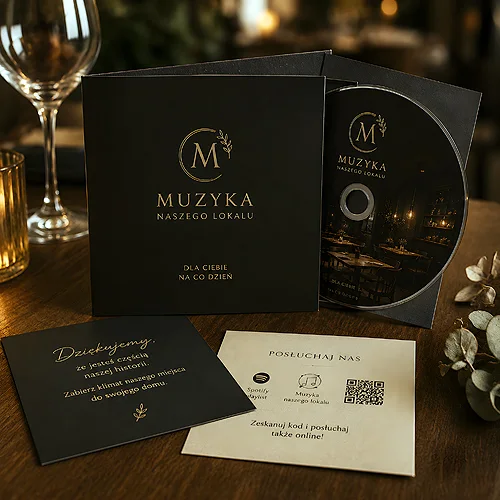
Such a set can be prepared as a branded disc with print and the venue logo - a consistent, ready-to-play medium instead of a random playlist. A disc with your logo on the cover is also a nice detail that matches the care put into the rest of the room. You do not have to hunt for the repertoire yourself - we will help pick it for the character of your venue and for every part of the day. On how to pick music on such a medium for a specific type of place, we write in our piece on music on a promotional disc matched to the industry.
Think of music like a menu - in a consistent style with the rest of the venue materials. If you are building a set for hospitality, see our materials for gastronomy venues, and for help preparing a branded medium write to us through the contact form.
One repertoire for the whole day is a bit like one dish for breakfast, lunch and dinner - it can be done, but the guest deserves more. Match the music to the time of day, watch the volume and tempo, keep it consistent with the character of the place, and the room will start to sound exactly the way you want people to remember it.