When we think of wedding music, we immediately picture a packed dance floor, a DJ raising the tempo and guests dancing until dawn. That is true - but it is only part of the day. Between the first dance and the last track there are many hours when no one is dancing, yet the music keeps working. During dinner, over supper and in the breaks for a smoke or a chat, the background music decides whether the reception flows calmly or slips into an awkward silence.
Well-chosen music beyond the dance floor is like good lighting - it does not draw attention, and yet everything looks better because of it. Below we show what to play in these quieter moments of a wedding, how to match the volume and mood to the time of day, and finally - how to close the whole soundscape into a keepsake you will return to years later.
- A wedding has several phases - dinner, supper, breaks - and each needs different background music than the dance floor.
- During meals the music should be quiet and calm, so it does not drown out conversations at the tables.
- Breaks are the moment for lighter, pleasant sounds - something between relaxation and the promise of more fun to come.
- It is worth preparing a few separate playlists for different times of day and settling them with the DJ or staff in advance.
- Selected tracks from the whole day can be gathered on a keepsake disc - for yourselves and for the guests.
A wedding is not one mood, but several
It is easy to think of a wedding as one big party, but in practice the day splits into clear phases that flow smoothly one into another. The reception begins calmly, picks up pace in the evening and softens again towards morning. The music should follow this rhythm rather than fight it.
Before you settle on specific tracks, it is worth mapping out these moments - exactly the way it is planned in a well-run hospitality venue, where the music changes with the time of day. If you are looking for inspiration on how such smooth transitions work in practice, take a look at our post on what music in a restaurant from breakfast to evening looks like - many of those principles carry straight over to a wedding.
- Welcome and dinner - guests are just settling in, getting to know each other, chatting. The music must be a background, not an event.
- First dances and warming up the party - this is where the dance floor and louder sounds come in, but that is a separate topic.
- Supper and the second hot course - a break in the dancing, everyone returns to the tables, the pace slows again.
- Breaks between blocks - stepping outside, conversations, a moment to breathe. The music keeps the mood but does not force anything.
What to play during dinner and supper
At meals one simple rule applies: the music must not shout over the conversations. Guests at the tables want to talk, get to know one another, raise a toast - and that is hard when an energetic hit blasts from the speakers at full volume. Here the background should support the atmosphere, not dominate it.
Mood and genres
Calm, warm sounds work well: instrumental jazz, gentle acoustic covers of familiar songs, bossa nova, mellow pop in a slightly toned-down version. Tracks that most guests have heard somewhere before work nicely - they spark fondness without drawing all the attention. Avoid pieces with a strong, dominant vocal and a fast tempo, because they unconsciously push conversations louder and raise the overall noise level in the room.
Set the volume at mealtime so that people sitting on opposite sides of the table can talk without raising their voices. If you have to speak louder than usual, the music is too loud. It is a simple test that always works - regardless of the genre.
If you want to dig deeper into choosing calm background music and how music shapes the way a place is perceived, our post on how to choose background music for a cafe, hotel, restaurant and spa will help. A wedding is, after all, also a reception in a rented venue, so the same mechanisms work in your favour.
Music for the breaks - a breather between blocks
Breaks are an underrated moment of a wedding. Some guests step outside, some stay at the tables, someone goes for dessert. It is the moment when the dance floor quietens, yet the day's energy should not drop entirely. Background music gently holds the mood and smoothly leads towards the next block of dancing.
For breaks, sounds lighter than at the meal work best, yet still calmer than on the dance floor - something that offers a breather and at the same time says the party is not over. What works well here:
- Rhythmic but unobtrusive tracks - light pop, funk in a mellow version, pleasant hits from years back.
- Familiar melodies in calmer arrangements - guests recognise them and smile, but no one feels pressured to return to the dance floor.
- Instrumental pieces with a clear but warm rhythm - a great background for conversations outside and at the bar.
Continuity is key. A sudden silence between blocks makes the reception briefly fade, and guests feel uneasy. A smooth background prevents this effect and keeps the wedding feeling considered and buttoned up throughout.
How to plan the musical setting step by step
The best music at a wedding is the kind no one has to think about during the day, because everything was settled beforehand. It is worth writing out the soundscape like a script - ahead of time, calmly, together with the person who will run it.
- Map out the phases of the day - welcome, dinner, first dances, supper, breaks, the finale. Note the intended mood for each.
- Prepare separate playlists - one for meals, one for breaks, one for the dance floor. Do not mix tempos within a single block.
- Settle everything with the DJ or staff - hand over the playlists and describe when each background should play and how loudly.
- Mark the tracks that matter to you - the first dance, the entrance song, the tune you met to. These give the day its personal character.
- Leave room for spontaneity - not every minute has to be scripted to the second. A good DJ reads the room and responds to the guests' energy.
This approach also works great when the reception takes place at a venue that lives by the rhythm of hospitality every day. If you are organising a wedding or another reception in such a place, it is worth visiting our section for the HoReCa industry - you will find materials there that help you shape the event coherently, from the menu to the table extras.
Close the soundscape into a keepsake
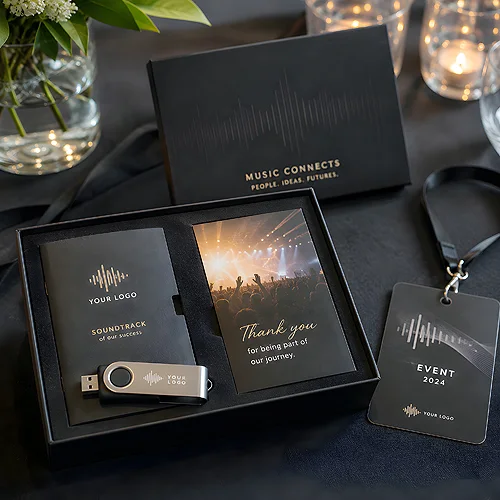
Wedding music lives for one day, but the memory of it stays for years. The tracks that played over dinner, the piece from the first dance, the song from the break at the bar - all of it can be gathered in one place and preserved. A keepsake disc with the playlist from your wedding is a gift that returns to that day every time you play it.
Such a disc also works well as a small gift for the guests - a lovely gesture at the close of the reception. It can be prepared with a custom print: names, the date and graphics consistent with the rest of the wedding stationery. If you are considering such a solution, see our discs and packaging and the option of printing on CDs and DVDs, thanks to which each disc looks like part of your story rather than a random extra.
It is worth treating this disc as an element of the whole wedding keepsake. If you want the gift for your guests to be truly polished, read our post on how to prepare a disc with music as a thank-you for wedding guests - you will find tips there on choosing the repertoire and the graphic setting so that the whole thing forms a coherent whole.
Music beyond the dance floor is the quiet hero of a wedding - it collects no applause, but without it the whole day would sound different. Plan it as carefully as the list of dances, match it to the time and mood, and finally close it into a keepsake. That way the wedding will sound good from the first toast to the last track, and the echo of that day will stay with you far longer.