The bakery on the corner, the practice two streets away, the workshop half the estate goes to - the best local businesses rarely win clients through big campaigns. They win them by being close, familiar and recommended by a neighbour. When you operate within a few streets, your advertising does not have to be the whole internet. It is enough to reach the people who walk past your door every day.
For a local business - services, food, a practice, a shop - the most valuable client is the one from the neighbourhood. The kind who drops in today, comes back next week and brings a friend along. You reach them most effectively where they actually are: in the letterbox, on a post by the bus stop, in a hand outside the shop, at the till of a friendly local spot.
Print has an edge here that is hard to find online - it is tangible, it stays in the home and it does not vanish once the screen is scrolled. In this post we show how to build local advertising from printed materials that genuinely brings in people from the nearest area.
- A local business wins on closeness - its advertising should be close too, in the places neighbours pass by.
- Leaflets to letterboxes, handouts outside the shop, posters on the estate and business cards at the till are channels tailored to the neighbourhood.
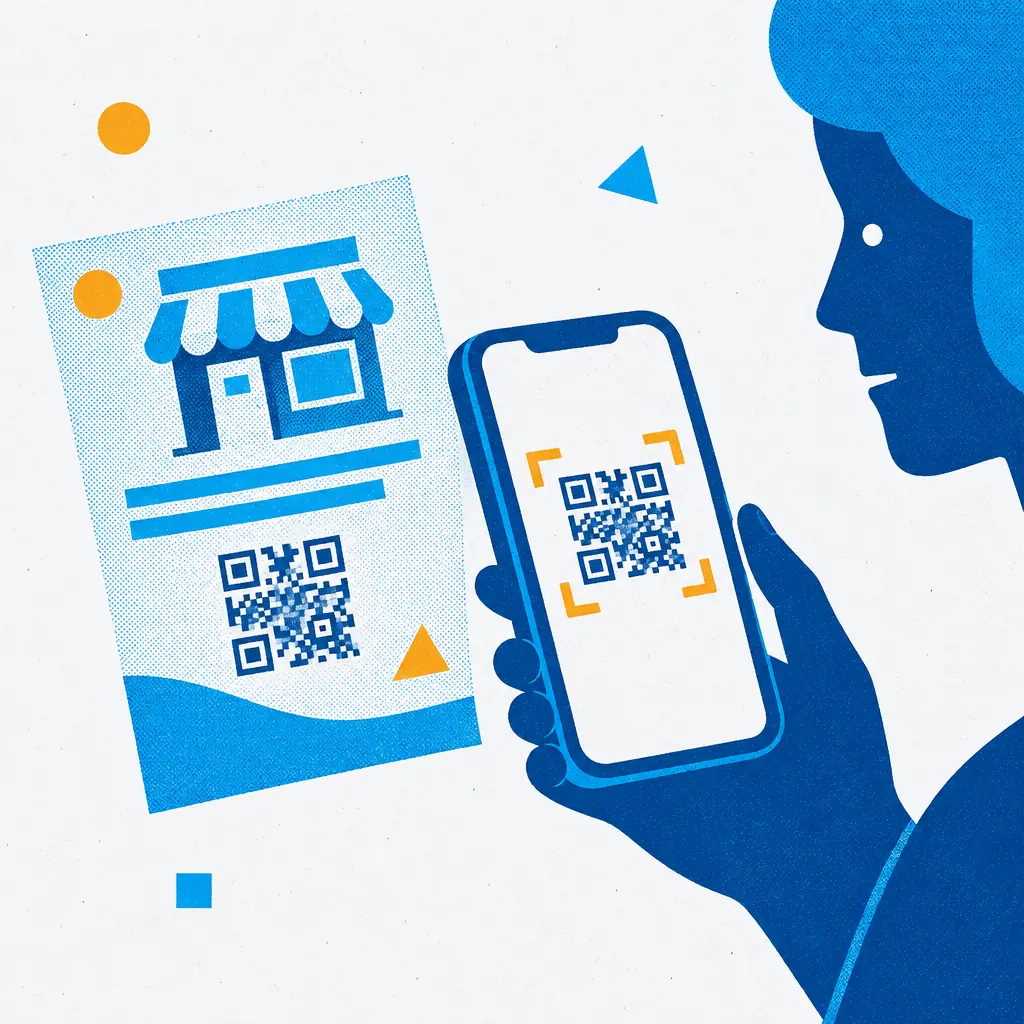
- Speak the language of the district - with an address, a small map and a QR code that leads straight to you.
- A "for neighbours" offer and a local context work better than generic advertising written to everyone.
- Within a few streets, well-designed print often beats internet advertising scattered across the whole city.
When print beats internet advertising
Internet advertising is great when you want to reach wide - a whole city, a region, a country. But a local business usually does not need the whole city. It needs those few thousand people who live and work within walking distance. And this is exactly where print shows its teeth.
A leaflet dropped into letterboxes on one estate lands precisely where you want it - without spreading the budget on clicks from the other end of the country. A poster on a post by the bus stop is seen by the same people every day, for weeks. Printed material stays on the fridge, on the cork board, in the kitchen by the phones - and reminds people of you just when the need happens to arise. An online banner disappears in a second; a leaflet can lie around for a month. We write more about when each channel pays off in our post printed or online advertising - which delivers better results.
Channels for reaching your neighbourhood
Local printed advertising has a few proven forms. They work best when they complement each other - the same message meets a resident in several places and, at some point, sticks in the memory.
- Leaflets to letterboxes - the simplest way to reach specific streets and blocks. You choose the range yourself, matched to where you actually deliver or whom you serve.
- Handed-out leaflets - outside your own spot, at the local market, at a nearby event. A short chat and a leaflet in the hand stay in the memory longer than an anonymous drop.
- Posters - on a post, in a window, on a residents' board. Visible from afar, they work around the clock.
- Business cards at the till - in your spot and at friendly neighbours'. The florist next to the hairdresser, the cafe next to the workshop - local businesses happily share counter space.
For letterbox distribution and handing out, classic leaflets work brilliantly - handy, legible and cheap in larger runs. Where visibility from a distance counts, go for posters with one strong slogan and a large address.
Speak the language of the district - address, map, QR
Local advertising wins on specifics. A generic slogan written "to everyone" gets lost, because it speaks to no one directly. A message for neighbours sounds different - it refers to a place the reader knows and to a situation they really find themselves in.
Instead of "professional hairdressing services", write "your hairdresser on Green Street - two steps from the bus stop". Instead of an impersonal appeal, show that you are part of the area. A few elements that make a difference in local print:
- A clear address - ideally with a reference point everyone in the area knows ("next to the pharmacy", "by the school").
- A small map - one glance and it is clear how to walk or drive there.
- A QR code - leading straight to the website, directions or booking, with no address to copy out.
- A "for neighbours" offer - something only someone local would appreciate builds the feeling that the advertising is about them.
The more the message sounds as if it were written specially for this one district, the stronger it works. The reader then feels they are not one of thousands of addresses in a campaign, but a neighbour you want to have around.
A leaflet the client will keep
The most effective local leaflet is not the one the client reads, but the one they keep. Tucked into a kitchen drawer, pinned to the fridge with a magnet, slipped into a wallet - it waits for the moment the service is actually needed. So it is worth giving the reader a reason not to throw it away.
A leaflet that, alongside the offer, carries real value works well: a small calendar for the fridge, local numbers everyone finds useful, a simple guide tied to your field. How to design such a piece we describe in more detail in our post on how to design a leaflet the client will keep for later, and on making the message memorable in itself - in the piece on how to design advertising materials the client will remember.
Add one element to the leaflet that keeps it out of the bin: a code for the first visit, a little calendar, a list of useful local numbers or space for the reader's own note. A leaflet that serves a purpose stays on the fridge far longer than a plain advert.
A consistent image at the counter and in the hand
A local business lives on recognisability. The more often a resident sees the same mark, colour and style - on a leaflet, a poster, in the window and on a business card - the faster your business becomes "the familiar one from the neighbourhood". Consistency builds trust before a single word is said.
That is why it pays to have all your materials play in one style. The same palette, the same mark, the same tone. Leave business cards at the till, slip them into parcels, hand them to clients - it is the cheapest carrier, circulating around the area on a recommendation. Their impact can be reinforced with simple finishes: matte or gloss lamination and a velvety Soft Touch coating, which make a small card look like it comes from a solid business.
For a business that operates locally, what counts is not reaching everywhere - it is reaching close. A leaflet in the letterbox, a poster by the bus stop, a business card at the till and a consistent, familiar image do together what no broad campaign can: they make you the business from the neighbourhood that everyone in the area knows and recommends onward. And that is where most local success stories begin.