This question comes back every time you plan a promotion budget: should you bet on printed materials or on online advertising? The answer "it depends" sounds like a dodge, but it really is the truth - because each channel does something different and works best when they play on the same team. Instead of picking a winner, let us calmly look at what each one does best.
- Print builds trust, is tangible and stays in memory - great locally and at the point of sale.
- Online gives reach, precise targeting and measurability - it works fast and is easy to change.
- The biggest results come from combining both: print drives to online (QR, address), online reminds people of the brand.
- The choice depends on your goal, budget and where your audience actually is.
What print does better than online
A printed material is picked up by hand. That tangibility matters - a flyer, business card or catalogue stays on the desk, in the bag, on the fridge. It does not vanish in a second like a post you scrolled past with your thumb.
Print also carries something hard to fake online - trust and a sense of solidity. A well-printed business card on quality paper says "I take my work seriously" before the first word is spoken. This works especially in local contact and in brand building.
- Tangibility and durability - the material stays with the recipient longer than a single glance.
- No "scrolling away" - no one closes a flyer with an ad blocker; you have full attention.
- Less fight for attention - a mailbox or a shop counter is not as crowded as a feed.
- Point of sale - in a store, at a fair, at the checkout, print works here and now.
- Premium feel - Soft Touch velvet lamination, textured paper and a solid paper weight build a sense of class a screen cannot deliver.
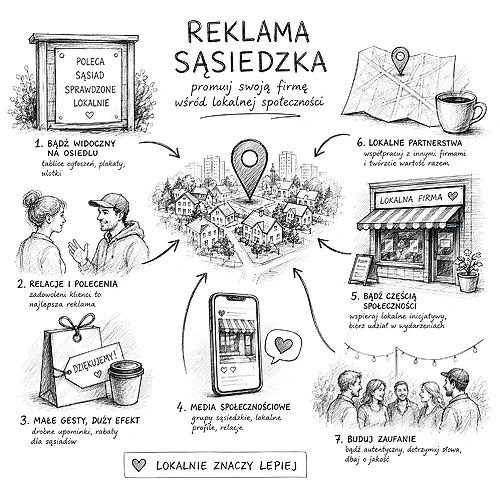
If you operate locally or meet your client face to face, well-designed advertising flyers can do more than yet another online campaign.
What online does better than print
Online advertising has undeniable strengths and there is no point pretending otherwise. Above all - speed and flexibility. You launch a campaign in a few hours, and when something is not working you change it instantly, without reprinting.
- Precise targeting - you reach specific groups: age, location, interests.
- Measurability - you see clicks, visits and the cost of acquiring a customer down to the penny.
- Reach - one material reaches thousands of people, also far beyond your town.
- Easy updates - a content fix takes a few minutes, not a new print run.
- Lower entry threshold - you can start with a small campaign and scale what works.
For promoting an online store, a quick sales push or building reach beyond your region - online will usually be the first choice.
Print and online are not rivals. They are two different tools that achieve the most when they work together.
When print, and when online
Instead of asking "which is better", it is worth asking "which is better for this goal". Below is a simple cheat sheet to make the decision easier.
Situations where print usually wins
- Local advertising - a district, a town, a neighbourhood.
- An event, fair or conference - a material in hand works on the spot.
- Point of sale - a flyer by the checkout, a catalogue on the counter, a poster in the window.
- A gift or branded giveaway - a physical thing that stays with the customer.
- Premium communication - when the brand should say "quality" through touch alone.
Situations where online usually wins
- Reach campaigns - reaching a large, dispersed group.
- Quick promotion - a sale, a time-limited offer.
- E-commerce - online sales, where a click leads straight to the cart.
- Testing - checking which message works before you spend more.
Most important: combine both channels
This is the heart of the whole conversation. The best results do not come from an "either-or" choice, but from synergy - when print and online complement each other and hand the audience over from one to the other.
It works both ways. Print drives to online - a QR code on a flyer, a short website address on a poster, a phrase to search for. Online reminds people of the brand they saw earlier in the real world - remarketing reaches someone who already held your business card.
- Put a QR code and a simple address on the printed material, leading to a specific page, not the homepage.
- Keep it visually consistent - the same colours, logo and tone in print and online build one recognisable brand.
- Make print measurable - a separate address or a discount code from the flyer shows how many customers came from there.
- Close the loop - whoever visited the store from the site gets reminded online about the offer.
Before you order a print run, add a QR code to the design leading to a dedicated campaign page with its own address. This way you can count how many visits the flyer brought - and for the next campaign you decide based on data, not a hunch.
How to choose: goal, budget, audience
The decision is easiest to make by answering three questions. Goal - do you want to sell here and now, or build a brand for years? Budget - do you have room for one strong channel, or for a coherent mix? Audience - where do they actually spend time and how do you reach them most easily?
Imagine a local cafe opening a new branch. It hands out flyers with a QR code in the area, and the code leads to a page with a coupon for the first coffee. In parallel, a short online campaign targets residents of the district. Whoever scans the code later sees a reminder online. Print gives presence in the field, online adds reach and measurability - and together they tell one coherent story.
If you are just putting together materials for such an action, take a look at our posts on what works in local advertising and how to design materials the client remembers. And for ideas on a specific print run - you will find the full offer in the product catalogue.
There is no single right answer to the question in the title. There is, however, a good strategy - match the channel to the goal, and ideally combine both so that print and online aim at the same target. Then the effect is greater than the sum of its parts.